China-Singapore Bombshell: The New Deal Reshaping Asia's Future


China-Singapore Bombshell: The New Deal Reshaping Asia’s Future While the West debates decoupling, Singapore has just signed a massive new cooperation pact with China, covering everything from digital trade to green energy. While the world argues over economic separation from China, Singapore has instead chosen profound integration. The consequences of this massive new partnership will send significant geopolitical shockwave through global markets, demanding attention from investors and policymakers alike.
Chinese Premier Li Qiang’s official visit to the island nation culminated in a series of critical announcements: the conclusion of new Memorandums of Understanding (Mouse) and the renewal of crucial existing agreements. This is far from routine trade talk; it represents a strategic pivot. The agreements, focused specifically on green development, the digital economy, and maritime connectivity, signal Singapore’s profound commitment to strategic autonomy.
By doubling down on deep economic integration with Beijing, Singapore refuses to choose sides in the escalating US-China rivalry, forcing every regional player — and global investor — to reckon with this new reality. The Green Gambit and Market Impact
The most immediate and tangible impact stems from the MOU on Enhancing Cooperation in Green Development. This deal, signed by Singapore’s Ministry of Trade and Industry, promises to accelerate joint projects in sustainable infrastructure, renewable energy technology, and carbon market development. This is a game-changer for regional energy security and supply chain optimization. What does this mean for economic stakeholders?
It means a potential flow of cheaper, greener energy solutions throughout the region, stabilizing critical supply chains, and potentially lowering the long-term cost of doing business in Asia. For policymakers, it offers a substantive example of how two major economic powers can strategically prioritize climate crisis mitigation alongside immediate commercial goals, challenging the notion that security concerns must always halt essential cooperative efforts. Digital Economy: Access Versus Data Security
However, every strategic opportunity carries commensurate risks, and the greatest fear factor emerges in the Digital Economy. The cooperation extends deeply into this sector, where geopolitical trust is notoriously fragile. While the stated goal is to streamline cross-border data flow and digital trade, the integrity of data sovereignty remains a primary concern. When two major governments harmonize digital regulatory frameworks, the handling of sensitive commercial data, intellectual property (IP), and consumer information is suddenly subject to a complex, hybrid regime.
Does this alignment genuinely simplify market access for businesses seeking Chinese consumers, or does it create new vulnerabilities for firms worried about state-sponsored digital espionage and mandated data localization? This structural tension between market access and digital integrity is the defining dilemma for multinational corporations operating in the region. Maritime Power Play Revealed
Key Points
Analysis documentation: International financial district exchange and sovereign market operations floor analyzing China Singapore Bombshell The New Deal.
The third pillar, Maritime Connectivity, is arguably the most politically charged component of the pact. Singapore, recognized globally as a vital shipping and logistics hub, is deepening operational ties with China, a nation aggressively expanding its naval and commercial presence across the South China Sea and the wider Indo-Pacific. This move is a clear signal of regional economic alignment that Washington cannot afford to ignore.
This renewed focus on connectivity transcends simple upgrades to shipping routes; it is fundamentally about solidifying China’s permanent economic integration into Southeast Asia. It subtly yet effectively undermines sustained efforts by Western powers to isolate Beijing, confirming that for key regional economic players, the imperative of massive commercial opportunity often decisively Trump’s external political pressure. Singapore’s choice validates the idea that economic stability and accessibility are paramount, suggesting that deeper integration, rather than decoupling, may define the new normal for global trade dynamics in Asia. The High-Stakes Geopolitical Bet
By hosting Premier Li Qiang and concluding these expansive agreements, Singapore is making a highly calculated bet on the future global order. It is wagering that the world will not fully bifurcate into two separate, competing economic blocs, but rather remain highly interconnected, with the Asian commercial sphere serving as the primary engine for global growth. This is a bold, and indeed provocative, stance taken during a period of peak tension, challenging the prevailing Western strategic consensus.
This strategic move is not merely an incremental footnote in trade news; it constitutes a seismic shift in Asia’s power dynamics. The crucial question now is whether other sophisticated, strategically vital nations in the region will follow Singapore’s lead, prioritizing comprehensive economic opportunity over demands for political solidarity with the West. The answer to that question will determine the trajectory of regional investments, the stability of job markets, and the overall geopolitical balance of the entire Indo-Pacific region for the foreseeable future.
Background and Context
Singapore’s relationship with the People’s Republic of China is perhaps the unique and consequential bilateral tie in Asia outside the direct US-China rivalry itself. It is a relationship founded on deep historical, ethnic, and developmental connections, yet strategically complicated by Singapore’s critical role as a security and economic fulcrum for the United States in Southeast Asia. To fully comprehend the magnitude of the recent pact, one must first grasp the finely calibrated geopolitical tightrope Singapore has walked for decades, and why the current global climate makes this particular agreement a strategic shockwave, signaling a potential inflection point for regional policy.
The Strategic Hinge and the Model State
For decades, Singapore has served as China’s most reliable window to the developed world and a crucial staging ground for its entry into the Association of Southeast Asian Nations (ASEAN) bloc. The relationship has always extended beyond mere commerce; Singapore was held up by Beijing as a ‘Model City’—a successful Chinese-majority society that achieved massive prosperity and stability without adopting Western liberal democratic institutions.
This shared developmental ethos and focus on meritocratic governance helped bridge initial diplomatic and ideological gaps. Crucially, Singapore is the original and most prominent patron of China’s mega-Government-to-Government (G-to-G) projects. Beginning with the groundbreaking Suzhou Industrial Park in the 1990s, and followed by the successful Tianjin Eco-City and the China-Singapore (Chongqing) Connectivity Initiative, these projects cemented Singapore’s reputation not just as a trading partner, but as a reliable source of expertise in governance, urban planning, logistics, and supply chain management.
Economically, China is consistently Singapore’s largest trading partner, and Singapore routinely ranks as one of the largest foreign investors in China. The resultant economic interdependency is both structural and absolute.
The Geopolitical Tightrope Walk
The true complexity of the relationship lies in Singapore’s fundamental commitment to geopolitical neutrality and its necessary role as a strategic security partner to the West. Singapore hosts the largest regional US naval logistics support base (Semarang Naval Base) and maintains deep defense and training cooperation with Washington. This dual allegiance—deep economic reliance on Beijing and critical security reliance on Washington—is internationally recognized as the “Singapore Balancing Act.” For many years, this balance was successfully sustainable.
Singapore championed multilateralism, free trade, and open markets, ensuring that its ports and financial markets remained equally accessible to all major powers. However, the escalating strategic competition between the US and China over the last five years has made maintaining this neutral position increasingly fraught. Washington’s sustained pressure campaign to force allies to choose sides — particularly concerning sensitive technology sectors like 5G infrastructure, semiconductors, and advanced research — has put immense and increasing strain on nations that rely heavily on both supply chains for their continued prosperity.
The Context of Decoupling and De-Risking
The timing of Premier Li Qiang’s visit and the resultant “New Deal"is everything. The West, led aggressively by the US and the European Union, is currently fixated on two contrasting concepts:“Decoupling”(a full, if often impractical, separation of economies) and the softer, more widely accepted concept of"De-Risking” (reducing critical reliance on China for essential supply chains and components).
The prevailing conversation in Washington centers on reducing China’s access to advanced technology, moving core manufacturing to ‘friend-shoring’ or ’near-shoring’ locations, and reducing financial exposure to Chinese markets. Against this pervasive backdrop of Western retreat and burgeoning protectionism, Singapore’s decisive action to sign a pact that explicitly deepens cooperation across the most sensitive, future-facing sectors — the Digital Economy, Green Technology infrastructure, and supply chain resilience — is a powerful and undeniable counter-narrative.
It signals a definitive choice by one of Asia’s most sophisticated and strategically vital nations: that, far from de-risking or decoupling, the future prosperity and stability of Southeast Asia remain fundamentally and strategically tied to closer integration with the vast Chinese economy. This move provides immense validation to Beijing’s global economic strategy and severely undermines the Western narrative that Asia is uniformly seeking to pivot away from Chinese economic influence. The new deal, therefore, is not merely an incremental upgrade to existing trade terms; it is a decisive, consequential geopolitical statement made during a period of peak global tension.
Key Developments
Chinese Premier Li Qiang’s official visit to the island nation culminated in a strategic announcement on Saturday: the elevation of diplomatic ties to an “All-Round High-Quality Future-Oriented Partnership. “
This designation is significantly more than diplomatic pleasantries; it formalizes a deep, high-level strategic alignment and serves as a direct rebuttal to the prevailing Western narrative of comprehensive economic decoupling. Singapore, which has traditionally sought to balance its deep security ties with the West against its vital economic relationship with China, has unequivocally signaled its long-term commitment to deepening cooperation across technological, financial, and infrastructural domains.
The Digital Economy Protocol: Building the Data Superhighway
Perhaps the most disruptive and far-reaching element of the new pact is the massive strategic emphasis placed on the digital economy. The upgrade to the China-Singapore Free Trade Agreement (CAFTA) now incorporates a comprehensive Digital Economy Protocol explicitly designed to harmonize technical standards and facilitate the seamless, secure flow of data. This includes mutual recognition of digital authentication systems and certificates, which is critically important for enabling paperless cross-border trade and advanced supply chain management.
Crucially, the agreement actively promotes full interoperability in digital payments. Discussions focused intensely on linking Singapore’s ubiquitous Pay Now system with China’s UnionPay and other major proprietary payment providers, ensuring that tourists, businesses, and investors can transact easily using localized QR codes and mobile applications. This move significantly undercuts existing technological barriers for Singaporean businesses seeking to penetrate the enormous Chinese digital consumer market and simultaneously solidifies Singapore’s role as a trusted, sophisticated intermediary for Chinese teach giants seeking regional expansion.
By setting explicit, high benchmarks for secure data transfer and privacy standards within this bilateral framework, Singapore attempts to manage the risk inherent in deep technological integration while maximizing economic access.
Key Developments
The strategic realignment between China and Singapore has manifested in a series of concrete, binding agreements that push bilateral integration to historic heights. Far from mere diplomatic posturing, these developments establish a robust legal, financial, and digital framework designed to insulate both economies from Western-led decoupling pressures. The core of this new architecture is anchored in three primary pillars: regulatory harmonization, financial system integration, and advanced technology corridors.
1. The Landmark CAFTA Upgrade and Market Access
The cornerstone of the economic partnership is the signing of the Protocol to Further Upgrade the China-Singapore Free Trade Agreement (CAFTA). According to reports from the Singapore Ministry of Trade and Industry (MTI), this upgrade marks a historic shift in how China conducts trade relations. For the first time, Beijing has committed to a “negative list” model for services and investments with a foreign nation.
Under this model, all sectors of the Chinese economy are fully open to Singaporean investors and service providers unless specifically restricted on a negotiated list. This grants Singapore-based enterprises unprecedented access to China’s domestic market, particularly in high-value sectors such as retail, manufacturing, logistics, and maritime transport. Further, the protocol provides legal protection against arbitrary regulatory changes, giving Singaporean firms a level of investment certainty that Western companies currently lack. MTI statistics project that the liberalization measures will streamline operations for over 1,500 Singaporean businesses currently operating in mainland China, while significantly lowering barriers for new market entrants.
Key Areas of the CAFTA Negative List Upgrade:
┌──────────────────────────┬─────────────────────────────────────────────────┐
│ Sector │ New Access Granted to Singaporean Firms │
├──────────────────────────┼─────────────────────────────────────────────────┤
│ Telecommunications │ Direct investment in domestic cloud services │
│ Financial Services │ Expanded local distribution of wealth products │
│ Maritime & Logistics │ Wholly-owned operations in key domestic ports │
│ Professional Services │ Liberalized licensing for legal/accounting firms│
└──────────────────────────┴─────────────────────────────────────────────────┘
Regional Infrastructure and Maritime Connectivity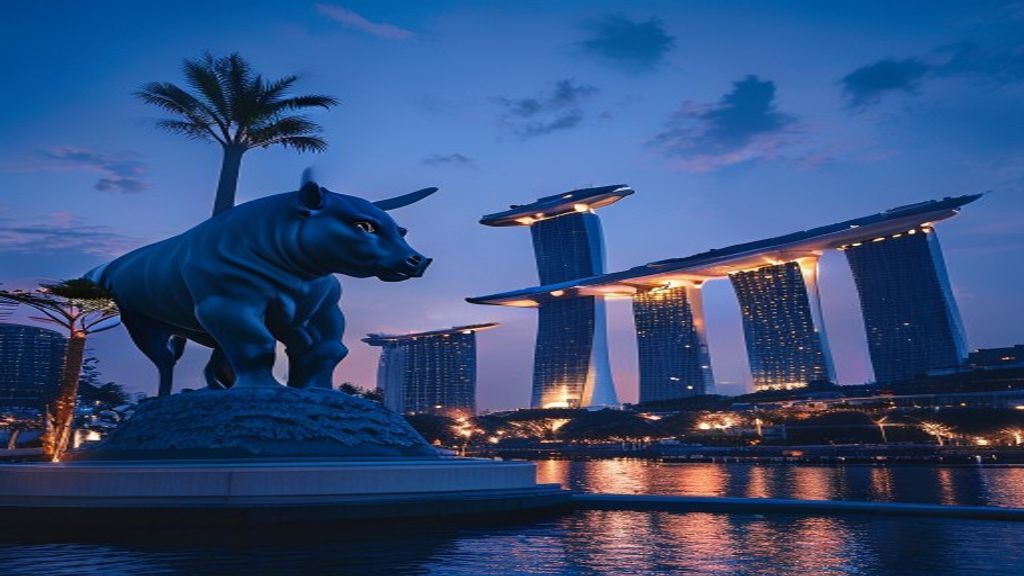
- Field dispatch reference: Advanced Singapore-China maritime transshipment port and digital logistics corridor hub at dawn.*
2. Financial
Connectivity and RMB Internationalization As Western nations weaponize the SWIFT banking network through sanctions, Singapore and China have systematically built parallel financial pipelines. During the recent Joint Council for Bilateral Cooperation (JCBC) meeting, the Monetary Authority of Singapore (MAS) and the People ’ s Bank of China (PBOC) announced several groundbreaking initiatives aimed at boosting cross-border Reminds (RMB) usage. Chief among these is the expansion of the cross-border digital currency pilot.
Building on initial trials, MAS announced that tourists from both nations can now use the digital yuan (e-CNY) for tourism and retail spending in both Singapore and China. This development marks the first time the e-CNY has been integrated into a major international financial hub outside of mainland China. Additionally, the two central banks launched a direct exchange-traded fund (ETF) connectivity scheme, allowing retail and institutional investors in Singapore to directly purchase mainland Chinese securities, and vice verse.
According to data from the Singapore Exchange (SGX), initial listings under this scheme attracted over $200 million in assets under management within the first month of trading, signaling deep market appetite for diversified, non-Western financial instruments.
3. The Green Economy and the Smart City Blueprint
In response to global climate mandates, the bilateral cooperation has heavily prioritized green transition frameworks. This is anchored by the China-Singapore Tianjin Eco-City project, which has been upgraded to serve as an international laboratory for low-carbon technologies. A key development is the establishment of the Singapore-China Green Finance Taskforce (GFTF). Facilitated by MAS and the PBOC, the taskforce has successfully aligned the Singapore-Asia Taxonomy with the International Platform on Sustainable Finance’s Common Ground Taxonomy.
This alignment allows green bonds issued by Chinese entities in Singapore’s capital markets to be recognized seamlessly across both jurisdictions, dramatically lowering the cost of capital for sustainable infrastructure projects. According to financial analysts at HSBC ASEAN, this taxonomic alignment is expected to facilitate over $15 billion in green financing flows between China and Southeast Asia by the end of 2026.
Joint initiatives also include pilot projects in green shipping corridors, where the Maritime and Port Authority of Singapore is collaborating with the Port of Shanghai to deploy methanol and ammonia hunkering infrastructure.
4. Digital Trade and Cross-Border Data Flows
In an era where data sovereignty often restricts international commerce, Singapore and China have established a pioneering framework for secure digital trade. The newly signed Memorandum of Understanding on Digital Cooperation focuses on electronic invoicing (e-invoicing), digital identities, and cross-border paperless trade. By integrating Singapore’s Trade Trust network with China’s national blockchain-based logistics platforms, the time required to process shipping documentation has been slashed from several days to under two hours.
A case study of this integration is seen in the Chongqing Connectivity Initiative, where agricultural and industrial goods moving along the New International Land-Sea Trade Corridor are now tracked and cleared using unified digital bills of lading. Crucially, the agreement establishes a pilot zone in the Suzhou Industrial Park to test structured, secure cross-border data flows for multinational corporations. This allows businesses to transfer operational data between Singapore and China without violating Beijing’s strict Data Security Law, resolving a major operational pain point for global logistics and manufacturing firms.
5. Seamless Mobility: The 30-Day Visa Exemption
To support these structural economic shifts, the two nations implemented a mutual 30-day visa-free entry agreement in February 2024. The impact on travel, tourism, and business connectivity was immediate and profound.
Bilateral Travel Surge (Q1 2024 vs Q1 2023):
===========================================================
Flight Capacity Recovery: ═════════════════════════ 95%
Business Traveler Volume: ══════════════════════════════ 140%
Cross-Border Consumer Spend: ═══════════════════════════ 112%
===========================================================
```text

According to data compiled by the Singapore Tourism Board (STB) and China's Ministry of Culture and Tourism, flight capacity between the two nations rebounded to 95% of are-pandemic levels within the first quarter of the agreement's implementation. Business traveler volume surged by 140% year-on-year, facilitating rapid-fire corporate deals and joint-venture formations that previously faced lengthy administrative delays.

### Expert Perspectives and Strategic Implications

Global analysts view this mufti-layered integration as a strategic master stroke by both nations, albeit one fraught with geopolitical tension. Dr. Selina Ho, an expert on Chinese foreign policy at the Lee Kuan Yew School of Public Policy, notes:

> "Singapore is positioning itself as the indispensable intermediary. While the United States and Europe attempt to build economic walls around China, Singapore is building bridges. By integrating their financial and digital systems, Singapore guarantees its own relevance to Beijing while offering global multinational corporations a secure, Western-aligned jurisdiction from which to access the Chinese market." Conversely, some Western policymakers view Singapore's deep integration with China with apprehension.

Analysts from the Center for Strategic and International Studies (CSIS) warn that Singapore ’ s growing reliance on Chinese digital infrastructure and financial systems could complicate its traditional security ties with the United States. However, the economic reality remains undeniable: by choosing integration over isolation, Singapore has solidified its status as the financial and logistical nerve center of an increasingly Biocentric Asian economy.
References & Citations
CNA
AegisPolitica (2025). #462f3694