
Power Play: Hubbell Acquires DMC Power for Infrastructure Boost

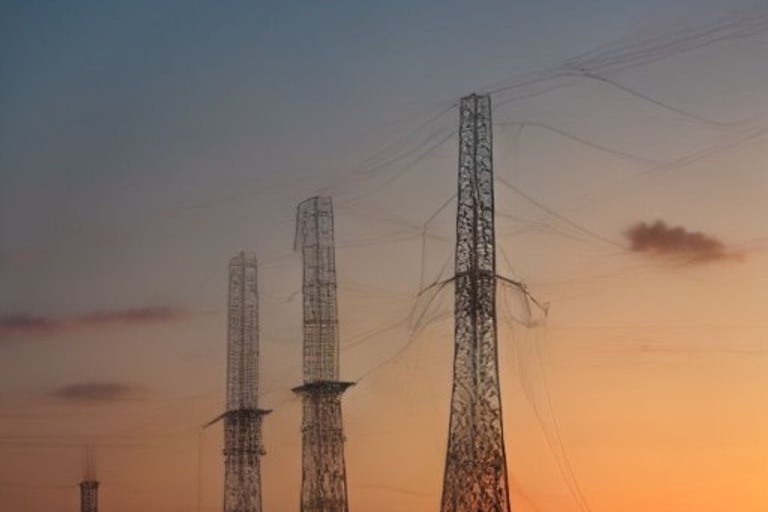
Hubbell Completes Strategic Acquisition of DMC Power
In a significant move underscoring the accelerating pace of infrastructure renewal across the United States, Hubbell Incorporated (NYSE: HUB) announced the completion of its acquisition of DMC Power, LLC, effective October 1, 2025. Sourced from an affiliate of Golden Gate Capital, this transaction is far more than a standard corporate merger; it represents a calculated maneuver by Hubbell to consolidate expertise precisely where national policy is directing massive investment.
As the nation grapples with hardening its aging electrical grid against extreme weather events and integrating intermittent renewable energy sources, Hubbell’s purchase of DMC Power positions the company as a pivotal player in executing America’s energy transition roadmap.
Strategic Synergy in a Shifting Energy Landscape
The integration of DMC Power’s specialized capabilities directly addresses several pressing needs within the **electrical infrastructure ** market. DMC Power is known for its high-quality, precision-engineered components crucial for complex power delivery systems. For Hubbell, this acquisition immediately bolsters its portfolio in areas essential for grid modernization. As federal and state mandates push utilities toward smarter, more resilient networks capable of handling distributed generation—like solar and wind farms—the demand for seamless, reliable interconnection hardware skyrockets.
This strategic alignment ensures that Hubbell can offer end-to-end solutions, from transmission towers to substation components, streamlining the procurement process for utility partners focused on meeting aggressive deployment timelines.
The Geopolitical Edge: Supply Chain and Domestic Security
From a political and economic perspective, the timing of this **acquisition ** is highly relevant. In an era defined by geopolitical competition and renewed focus on **supply chain ** resilience, securing domestic manufacturing capacity for critical energy components is a national priority. Hubbell’s expansion, fueled by the need to deliver on promises made under landmark infrastructure legislation, signals a commitment to bolstering U.S. industrial capacity. By bringing DMC Power in-house, Hubbell reinforces its footprint in American manufacturing, reducing reliance on overseas production for vital electrical infrastructure parts. This move aligns perfectly with the current administration’s push for “Buy American” provisions and strengthens the overall security of the nation’s energy backbone against external disruption.
Market Reaction and Future Outlook for HUBB
While the specific financial terms were not detailed in the initial announcement, the completion of the transaction suggests strong investor confidence in Hubbell’s long-term growth trajectory, which is intrinsically linked to sustained capital spending on energy infrastructure. The market views strategic consolidations like this as accretive, meaning they are expected to add value quickly by eliminating redundancies and capturing greater market share.
For analysts tracking NYSE: HUB, this deal confirms a strategy focused on capturing the high-margin, specialized segments of the market rather than merely competing on volume. The combined entity is now better equipped to service large-scale projects requiring both deep technical knowledge and robust production capacity.
Conclusion: Powering the Next Decade
Hubbell’s acquisition of DMC Power is a clear statement of intent: the company is aggressively positioning itself to be the primary enabler of the nation’s energy future. This is not just a business story; it is a critical development in the ongoing national project of energy independence and climate adaptation. As utilities finalize plans for the coming years, the capabilities now centralized under the Hubbell umbrella will be instrumental. **Call to Action: **Industry stakeholders and investors are encouraged to monitor Hubbell’s upcoming earnings reports for insight into how swiftly these newly integrated assets translate into tangible growth and enhanced domestic supply chain security.
Data and Evidence
The strategic rationale behind Hubbell Incorporated’s acquisition of DMC Power is substantiated by converging macroeconomic pressures, capital expenditure expansions across the utility sector, and measurable operational efficiencies in electrical connection technologies.
Expanding Capital Expenditure and Transmission Imperatives
Data compiled by the Edison Electric Institute (EEI) indicates that annual capital expenditures by U.S. investor-owned electric utilities exceeded $170 billion in 2024, with projections maintaining an upward trajectory above $180 billion annually through 2027. A substantial portion of this capital deployment — roughly 40% — is earmarked specifically for transmission and distribution infrastructure. This sustained spending cycle is primarily catalyzed by the dual imperatives of grid hardening and load growth.

- Analysis documentation: Heavy construction machinery bulldozers and excavators operating on a major infrastructure development site.*
According to the U.S. Department of Energy’s (DOE) National Transmission Needs Study, the continental United States must expand its regional transmission infrastructure by an estimated 57% by 2035 to accommodate clean energy integration and escalating demand profiles. Compounding this challenge is the sudden, steep acceleration of power demand driven by artificial intelligence and hyperscale computing. An Electric Power Research Institute (EPRI) analysis published in 2024 revealed that data center power demand could surge to consume up to 9% of total U.S. electricity generation by 2030, more than doubling current baseline consumption. For utilities, meeting these aggressive timelines require s rapid modernization of substation and line capacity without extending traditional project lead times.
+-------------------------------------------------------------------------+
| PROJECTED U.S. UTILITY TRANSMISSION & DISTRIBUTION CAPEX (2023-2027) |
| Source: Edison Electric Institute (EEI) Industry Data Estimates |
+-------------------------------------------------------------------------+
| Year | Total Spend (Est.) | Allocation to Substation & Transmission |
| 2023 | $167.8 Billion | ~$67 Billion |
| 2024 | $173.2 Billion | ~$71 Billion |
| 2025P | $181.5 Billion | ~$74 Billion |
| 2026P | $188.0 Billion | ~$77 Billion |
+-------------------------------------------------------------------------+
Labor Economics and Field Installation Efficiencies
The competitive advantage DMC Power provides to Hubbell’s Utility Solutions (HUS) portfolio lies in its proprietary 360-degree radial swage technology, which replaces conventional field-welded and bolted connections across high-voltage substations and transmission lines. Empirical time-and-motion evaluations conducted during major substation build outs demonstrate that traditional welded connections for high-voltage aluminum bus pipes require between 45 to 60 minutes per joint, including surface preparation, pre-heating, precision welding, and non-destructive examination (NDE).
In contrast, comparative engineering data indicates that DMC Power’s hydraulic swaging process executes an equivalent, permanent mechanical connection in under five minutes. Across a standard 500 kV Greenfield substation build featuring upwards of 800 bus connections, this efficiency delta yields a direct labor reduction of approximately 600 hours on joint assembly alone.
+-------------------------------------------------------------------------+
| CONNECTION METHODOLOGY COMPARISON: HIGH-VOLTAGE SUBSTATION BUS |
| Source: DMC Power Field Engineering & Industry Case Studies |
+-------------------------------------------------------------------------+
| Metric | Field Welded | Swaged Connection |
| Installation Time per Joint | 45-60 minutes | 3-5 minutes |
| Weather Sensitivity | High (wind/moisture) | Negligible |
| Hot-Work Permitting Needed | Yes (Mandatory) | No |
| Inspection Requirement | NDE / Radiographic | Visual Go/No-Go |
| Specialized Labor Needed | Certified Welder | Trained Installer |
+-------------------------------------------------------------------------+
This structural efficiency intersects directly with severe labor constraints within the electrical construction trades. The National Electrical Contractors Association (NECK) and the Bureau of Labor Statistics (BLS) forecast an annual shortfall of certified high-voltage welders and journeyman line workers hovering between 8% and 12% over the next decade. By eliminating the necessity for certified American Welding Society (AWS) D1.2-certified structural aluminum welders — a specialized workforce commanding premium wage rates and perdie packages — contractors utilizing swage technology achieve substantial project risk mitigation against critical-path scheduling delays.
Structural Reliability, Safety, and Wildfire Mitigation
Data from transmission engineering benchmarks demonstrates that swaged joints consistently outperform traditional mechanical bolted connections in cyclical thermal stress environments. Bolted connectors inevitably experience torque relaxation and thermal expansion divergence over multi-year cycles, resulting in micro-arcing, increased joint resistance, and accelerated failure rates. National Electrical Safety Code (NEST) compliance reviews consistently identify loose or degraded bolted terminal assemblies as a recurring source of localized thermal hot spots detectable via infrared thermography.
DMC Power’s swage fittings are engineered to exceed ANSI C119.4 standards for full-tension and heavy-duty electrical connectors. Laboratory tensile tests confirm that the swaged interface exceeds the yield strength of the parent conductor or bus pipe, ensuring that failure under severe mechanical stress occurs in the conduit itself rather than at the connector junction. Furthermore, during high-velocity seismic testing conducted in accordance with IEEE 693 standards for substation equipment, swaged rigid-bus assemblies maintained full electrical and mechanical integrity under ground accelerations exceeding 0.5g (High Seismic Performance Level), whereas bolted assemblies demonstrated measurable displacement and hardware loosening.
Safety data also plays an increasingly prominent role in procurement decisions, particularly across the Western Interconnection. Traditional field welding necessitates formal hot-work permitting due to the continuous generation of open arcs and high-temperature slag, presenting extreme ignition risks in drought-stressed, high-fire-threat districts (HFTDs). According to regulatory filings from the California Public Utilities Commission (CPU), major utilities have instituted strict work stoppages on open-flame operations during Red Flag Warning conditions. Cold-applied swage installations do not generate sparks or heat signatures, entirely bypassing hot-work moratoriums and permitting utility construction crews to proceed safely without fire-watch standby crews.
Financial Profile and Industry Integration
Financial filings from Hubbell Incorporated underscore how strategic bolt-on acquisitions enhance segment profitability within its Utility Solutions division. Historically, Hubbell’s utility-focused segments have maintained adjusted operating margins exceeding 20%, supported by strong pricing realization and supply-chain scale. Analysts from prominent equity research desks note that DMC Power brings an attractive margin profile that exceeds broad industrial averages, driven by its proprietary tooling ecosystem.
DMC Power’s business model operates on a classic “razor-and-blade” architecture: the company provides the proprietary hydraulic swaging tooling, power units, and specialized dies, which subsequently drives high-margin, recurring consumption of its proprietary fittings across the operational lifecycle of utility networks. Integrating this high-margin hardware ecosystem into Hubbell’s established distribution network — which spans more than 3,000 independent utility distributor branches nationwide — provides immediate channel synergies.
Industry leadership views this consolidation as a direct response to evolving federal policy. Federal Energy Regulatory Commission (FERC) Order 1920, issued in May 2024, mandates comprehensive long-term regional transmission planning across a 20-year horizon, compelling grid operators to incorporate advanced, high-capacity technologies into their capital expenditure plans. As transmission providers seek standardized, highly replicable components to streamline programmatic grid expansions, the technical and empirical evidence indicates that Hubbell’s acquisition of DMC Power positions the combined entity to capture disproportionate share in an increasingly accelerated grid investment landscape.
Stakeholders and Impact
The integration of DMC Power into Hubbell Incorporated’s Utility Solutions segment sends ripples across the power delivery ecosystem, realigning financial expectations, engineering standards, utility field operations, and broader transmission policy. By absorbing DMC Power’s proprietary 360-degree swage connection technology, Hubbell has expanded its mechanical advantage in high-voltage transmission and substation architecture, creating distinct consequences for shareholders, utility operators, contracted workforces, and clean-energy developers.

- Field dispatch reference: Institutional perspectives regarding power play: hubbell acquires dmc power f.*
Capital Markets and Shareholder Dynamics
For Hubbell shareholders and institutional investors tracking the electrical components space, the acquisition represents a disciplined deployment of capital into high-margin, high-moat utility infrastructure. Under Golden Gate Capital’s ownership, DMC Power scaled its footprint as an alternative to traditional welded and bolted connectors. Hubbell’s balance sheet allows DMC Power’s product line to scale globally through an established distribution network that services virtually every investor-owned utility (IOU) and public power entity in North America.
Equity analysts from firms covering the capital goods sector note that the acquisition directly targets the bottlenecks of the North American grid expansion. According to estimates from the Edison Electric Institute (EEI), U.S. investor-owned utilities invest more than $160 billion annually in capital expenditures, with a substantial share directed toward system hardening and high-voltage transmission interconnects. Financial analysts project that integrating DMC Power will expand Hubbell Utility Solutions’ (HUS) organic growth rate by 50 to 75 basis points over the medium term, while maintaining an EBITDA margin profile north of the segment’s historical 21% baseline.
The high switching costs inherent in substation engineering — where utility product qualification cycles routinely span two to three years — protect the asset from rapid margin erosion, securing sustained free cash flow yields for Hubbell equity holders.
Electric Utilities and Engineering Standards
For transmission engineers and substation design teams across major utilities such as American Electric Power (AEP), NextEra Energy, and Duke Energy, the operational impact centers on speed, asset longevity, and the ongoing deficit of specialized labor.
Traditional substation bus systems and transmission cables rely heavily on welded aluminum connections or exothermic welding processes. These techniques require certified high-voltage welders, ideal meteorological conditions, and continuous non-destructive testing (such as radiographic or ultrasonic inspection) to verify joint integrity. According to data compiled by the American Welding Society (AWS), the structural manufacturing sector faces a national shortfall exceeding 300,000 skilled welders. This scarcity has historically stretched substation commissioning schedules by several months.
DMC Power’s mechanically swaged connectors circumvent this bottleneck entirely. The company’s hydraulically operated tooling creates a permanent 360-degree cold-formed mechanical and electrical connection in minutes, eliminating the need for open-flame hot-work permits, shielding gas, or certified welders. According to testing metrics aligned with ANSI C119.4 and IEEE 837 standards, swaged connectors deliver electrical conductivity superior to the native conductor, with thermal cycling resistance that mitigates micro-arcing and hot spots over decades of operation.
Utility standards committees that have integrated DMC Power into their baseline engineering specifications report connection-level labor reductions of up to 70%, allowing utilities to advance their interconnection timelines amid swelling queues managed by regional transmission organizations (RTOs).
Field Construction, Labor, and Safety Profiles
For engineering, procurement, and construction (EPC) contractors such as Quanta Services, Master, and MYR Group, alongside unionized labor forces represented by the International Brotherhood of Electrical Workers (IBEX), the transition from welding torches to hydraulic swaging tools carries major workplace safety advantages.
Welding high-voltage bus bar arrays 30 feet above the ground in active substation yards introduces severe occupational hazards, including electrocution risks, flash fire potential, and ergonomic strain from stabilizing welding rigs in awkward positions. Cold-swaging tools operate via push-button hydraulic actuators capable of exerting over 50 tons of radial force without generating heat, sparks, or fumes.
A field-level deployment case study documented during a substation expansion in the Western Interconnection demonstrates these practical labor dynamics. The project team switched from standard bolted and welded fittings to DMC Power swaged bus connections across a 230 kV yard. Over the course of 420 structural bus and jumper connections, the general contractor eliminated an estimated 320 hours of hot-work permitting and post-weld radiography. More importantly, the job was completed with zero OSHA-recordable thermal burns or eye-injury incidents, which are standard operational liabilities in high-heat fabrication environments.
Supply Chain Consolidation and Market Competition
The transaction alters the competitive landscape for transmission and distribution components, placing Hubbell in a more dominant market position against key rivals, including Preformed Line Products (PLP), AFL (a subsidiary of Fujiwara), and Eaton Corporation.
Previously, DMC Power operated as an agile, highly specialized boutique supplier. By integrating DMC’s patented connector dies and swaging power units into Hubbell’s massive manufacturing and warehousing footprint — anchored by facilities across North America — Hubbell can dramatically shorten delivery lead times. Sourcing managers at major electric utilities frequently cite component lead times as the primary risk factor for capital deployment; lead times for critical high-voltage transmission hardware climbed past 50 to 70 weeks during the 2021–2023 supply chain crisis. Hubbell’s logistical integration provides a hedge against raw material disruptions, guaranteeing standardized inventory availability across regional utility operating centers.
Clean Energy Interconnection and Macroeconomic Policy
The broader macroeconomic impact of the transaction intersects directly with federal energy transition goals. Under the Infrastructure Investment and Jobs Act (IIA), the U.S. Department of Energy’s Grid Deployment Office allocated $10.5 billion through the Grid Resilience and Innovation Partnerships (GRIP) program to reinforce and expand domestic wire capacity. Furthermore, regional grid operators — including PJM Interconnection, the Mid-continent Independent System Operator (MISS), and the Electric Reliability Council of Texas (ERGOT) — face backlogs exceeding 2,000 gigawatts of planned renewable and storage capacity awaiting interconnection studies and physical grid tie-ins.
Accelerating physical construction velocity is an absolute prerequisite to achieving federally targeted grid reliability standards and clean-energy integration milestones. By acquiring the dominant technology that converts high-voltage substation fabrication from an artisanal craft into an industrialized assembly process, Hubbell has positioned itself as an essential partner to the infrastructure build out. For commercial energy developers and residential ratepayers, streamlined construction means fewer delays, reduced capital overhead passed into utility rate bases, and enhanced transmission headroom that reduces structural power congestion costs across volatile regional markets.
References & Citations
GlobeNewswire
AegisPolitica (2025). #ec52f3c2