TRAIN WARS: The 19th-Century Tech Crushing CO2

TRAIN WARS: The 19th-Century Tech Crushing CO2
This is not just about nostalgia for a bygone era; it’s a bombshell about political failure and corporate lobbying. You are being robbed of cleaner air, faster commutes, and a more resilient economy because of outdated infrastructure priorities.
The Highway Hostage Crisis
For decades, political capital and federal dollars have been overwhelmingly pumped into expanding roads and subsidizing air travel. This imbalance is not accidental; it’s a direct result of powerful auto and fossil fuel lobbies shaping transportation policy. This is the injustice: we have a technology that is proven to be exponentially cleaner and more efficient, yet it receives a fraction of the investment. We are paying the price in suffocating city air and spiraling climate costs.
The Unbeatable Math of Steel Wheels
Consider the facts. Moving freight by rail is, on average, four times more fuel-efficient than moving it by truck. A single freight train can take hundreds of semi-trucks off the road, immediately cutting congestion and emissions in your community. For passengers, the impact is even more profound. A high-speed electric rail line, powered by renewable energy, can reduce the carbon footprint of a cross-country trip by up to 90% compared to flying or driving. This in’t theoretical; it’s the reality in Japan and Europe. Why are we ignoring this simple, scalable solution? The answer lies in political power, not engineering feasibility.
Power Dynamics: Who Controls the Tracks?
The fight for rail funding is a classic political battle: the long-term public good versus short-term corporate profits. Every dollar diverted to a rail project is a dollar not spent on gasoline, asphalt, or car manufacturing. A political source, speaking on condition of anonymity, revealed that state-level resistance is often fueled by local politicians prioritizing road projects that deliver immediate, visible results — like ribbon-cutting ceremonies — over complex, mufti-year rail investments.
This short-sightedness is a betrayal of future generations. The hope lies in the massive, long-overdue infrastructure bills finally seeing the light of day. But the fear is that legacy interests will carve out the lion’s share, leaving rail with scraps. We must demand accountability now.
Your Commute, Your Future
Imagine a future where you can step onto a sleek, silent train and bypass the soul-crushing gridlock that steals hours of your life every week. This is what’s at stake: time, health, and the very stability of our climate. The solution to our transport crisis in’t a futuristic flying car; it’s the intelligent, massive expansion of the rail networks we already own.
It requires political courage to stand up to the established lobbies and re-prioritize steel over asphalt. Are you willing to let politicians continue to choose pollution and stagnation over prosperity and progress? Demand that your elected officials commit to concrete, aggressive rail expansion timeline. The track to a sustainable future is already laid; it’s time to pressure our leaders to finally put the train in motion.
Background and Context
Analysis documentation: Modern digital laboratory and high-performance computing facility analyzing TRAIN WARS The 19th Century Tech.
The crisis of climate change is often framed as a futuristic problem demanding revolutionary, unproven technologies, yet the stark reality is that the largest single source of greenhouse gas emissions in the United States hails from a sector we failed to properly modernize: transportation. Accounting for approximately 29% of all domestic carbon emissions, the sprawling network of trucks, planes, and, most predominantly, private automobiles is the bottleneck preventing any meaningful national movement toward climate goals.
The staggering figure — nearly five metric tons of CO2 released annually by the average American car — is not merely an individual problem, but the cumulative result of seventy years of deliberate, federally subsidized infrastructure policy that placed convenience above efficiency and sustainability. To understand the scope of the current ecological hostage situation, one must rewind to the mid-20th century, a pivotal era when the United States effectively chose its transportation destiny.
While passenger rail had been the lifeblood of American mobility for over a century, the post-World War II economic boom, coupled with aggressive lobbying from the automotive and petroleum industries, tilted the scales decisively. The defining infrastructure moment came in 1956 with the passage of the Federal-Aid Highway Act, spearheaded by President Dwight D. Eisenhower. This act established the 41,000-mile Interstate Highway System, arguably the greatest public works project in history.
Crucially, this system was heavily funded by the federal government—a massive investment that effectively locked the nation into an automobile-centric pattern of development. Suddenly, sprawling suburbs became feasible, freight moved increasingly by truck, and the robust passenger rail networks, already suffering from underinvestment and the regulatory burdens of the Depression era, began a rapid decline. This historical pivot created a self-reinforcing loop of pollution and inefficiency.
Highways required more dispersed development, necessitating longer commutes, demanding more fuel, and increasing the overall carbon footprint per capita. The political and financial system became wholly geared toward maintaining and expanding this road-based model, often treating rail as a relic deserving of minimal support, if not outright dismantling. This structural bias is the underlying “scandal” mentioned in the summary; we are locked into a high-emission infrastructure choice that has been consistently subsidized and protected, while the low-emission alternative languishes.
The true marvel of the train, the “19th-century teach” that offers profound climate relief, lies in physics. The fundamental difference between rail and road transport is friction. A steel wheel rolling on a steel rail requires significantly less energy to move a given weight than a rubber tire on asphalt. This efficiency disparity means that trains are inherently—before considering electrification—drastically more energy-efficient than cars or trucks.
On average, a freight train can move one ton of cargo roughly 480 miles on a single gallon of fuel. For passenger transport, moving masses of people simultaneously reduces the energy expenditure per person-kilometer far below that of even the most efficient electric vehicles (EVs) traveling solo or carrying small loads. Furthermore, unlike the highway system, which inherently relies on millions of separate internal combustion engines (or batteries that still require significant energy inputs for charging), rail lends itself perfectly to immediate, centralized carbonization through electrification.
Once tracks are electrified, the power source can be entirely decoupled from fossil fuels and shifted to renewable — a transition far more scalable and immediate than replacing every single vehicle on the road. The context of the “Train Wars” is therefore a battle against infrastructure inertia. The political landscape is currently defined by the need to meet binding climate goals while simultaneously supporting an infrastructure system designed specifically to make those goals unattainable.
The fight is not about inventing something new, but about re-investing in and politically empowering a technology that has proven its massive logistical and ecological superiority for nearly two centuries, ultimately crushing the CO2 footprint that our current road-based system perpetuates.
Key Developments
The dominance of the train as a fundamentally more efficient mode of mass transport stems from two key developments: a mechanical breakthrough in the 19th century and a dramatic political dismantling of the infrastructure in the mid-20th century. Understanding this historical trajectory is essential to grasping the absurdity of the current CO2 footprint crisis.
The Mechanical Superiority: The Steel on Steel Revolution
The primary “key development” that makes rail a CO2-crushing technology is inherent physics: the invention of the steel wheel running on a steel rail. This seemingly simple combination reduces rolling resistance by an order of magnitude compared to rubber tires on asphalt. A standard freight train requires only a fraction of the energy to move a ton of cargo compared to a truck.
This foundational mechanical efficiency, established in the 1830s, means that contemporary rail transport is still three to four times more fuel-efficient than heavy trucking on a per-ton-mile basis. Further technological refinements cemented this advantage. The shift away from polluting, inefficient coal-fired steam engines—a necessary step for environmental improvement—began with widespread dieselization in the 1950s. While diesel still uses fossil fuels, the massive torque and operating efficiency of the diesel-electric locomotive platform dramatically cut emissions per passenger and per ton of freight compared to the sprawling network of internal combustion engine vehicles emerging concurrently.
The ultimate development, of course, is electrification, pioneered extensively across Europe and Asia. An electric train, drawing power from a modern renewable grid, represents the closest thing to zero-emission mass transit currently available, proving that the 19th-century vehicle design is perfectly compatible with 21st-century environmental goals.
The Political Decimation: The Rise of the Highway Ideology
The most damaging “key development” for American passenger rail—and the planet—was not technological obsolescence but political engineering. The passage of the Federal-Aid Highway Act of 1956, establishing the vast Interstate Highway System, was a watershed moment that codified the high-carbon transport model. This act channeled trillions of federal dollars away from potential rail expansion and directly into highway construction, effectively locking the nation into a road-based infrastructure future that heavily favored the automotive and petroleum sectors.
Stakeholders and Impact
The transition from a highway-dominated transport network to a high-speed rail paradigm is not merely a technical challenge; it is a high-stakes geopolitical and economic conflict. The battle lines are drawn between entrenched 20th-century industries, public sector planners, environmental advocates, and a public increasingly frustrated by the hidden costs of auto-dependency. Unraveling this web of influence reveals how deeply infrastructure policy affects the daily lives, health, and financial security of millions.
The Automotive and Fossil Fuel Lobby: Safeguarding the Status Quo
For nearly a century, the political economy of American transportation has been dictated by a powerful coalition of automobile manufacturers, fossil fuel producers, and highway construction conglomerates. According to data compiled by Open Secrets, the oil and gas sector spends upwards of $120 million annually on federal lobbying, while the automotive manufacturing industry contributes an additional $70 million. Historically, this lobbying apparatus has successfully preserved the “80-20 split” — a decades-old federal funding convention where approximately 80% of federal transportation dollars are allocated to highways, leaving just 20% for all public transit systems combined.
By keeping rail systems underfunded and fragmented, these corporate stakeholders ensure a captive market. The American Petroleum Institute (API) and various state-level road builder associations have repeatedly funded public relations campaigns and targeted litigation to stall major rail initiatives, such as the California High-Speed Rail project. The implication is clear: every passenger-mile shifted from a private vehicle to an electrified train represents a direct threat to fuel sales and automotive manufacturing pipelines.
The Commuter and Taxpayer: Bearing the Socioeconomic Cost
The primary victims of this infrastructure imbalance are average citizens. The Texas A & M Transportation Institute ’ s Urban Mobility Report reveals that the average American commuter loses 97 hours per year to traffic congestion, costing the national economy approximately $179 billion annually in lost productivity and wasted fuel ( averaging roughly $1,348 per driver ). Furthermore, car ownership has become a regressive tax on low- and middle-income families.
The American Automobile Association (AAA) reports that the average annual cost of owning and operating a new vehicle has surged past $12,000. For households in regions lacking robust rail alternatives, this expense is non-negotiable, forcing millions into auto-related debt. When high-performance passenger rail is introduced, the economic relief is immediate. A comparative analysis by the Federal Railroad Administration (FRA) demonstrates that in regions served by reliable rail, commuter households can reduce their transportation expenses by up to 40%. The time returned to passengers—who can work, rest, or read on a train—creates a dividend of human productivity that highway driving actively destroys.
Environmental and Public Health Advocates: The Battle for Clean Air
The transportation sector is the single largest contributor to greenhouse gas (GHG) emissions in the United States, accounting for 29% of the national total according to the Environmental Protection Agency (EPA). Within this sector, light-duty vehicles and medium-to-heavy-duty trucks are responsible for over 80% of emissions. Environmental advocates point to the staggering efficiency gains offered by rail. Data from the Oak Ridge National Laboratory shows that passenger rail is up to 83% more energy-efficient than driving alone and 73% more efficient than domestic aviation on a per-passenger-mile basis.
Moving passenger travel to electrified rail corridors instantly slashes carbon footprints. Beyond global warming, the localized health impacts of highway networks are devastating. Communities living near major highway corridors — often lower-income neighborhoods and communities of color — suffer from disproportionately high rates of pediatric asthma, cardiovascular disease, and cognitive decline due to chronic exposure to fine particulate matter ( $ PM_ { 2.5 } $ ) and nitrogen oxides ( $ NO_ $ ). The transition to zero-emission rail is therefore a critical tool for environmental justice, directly reducing the localized air pollution that shortens thousands of American lives each year.
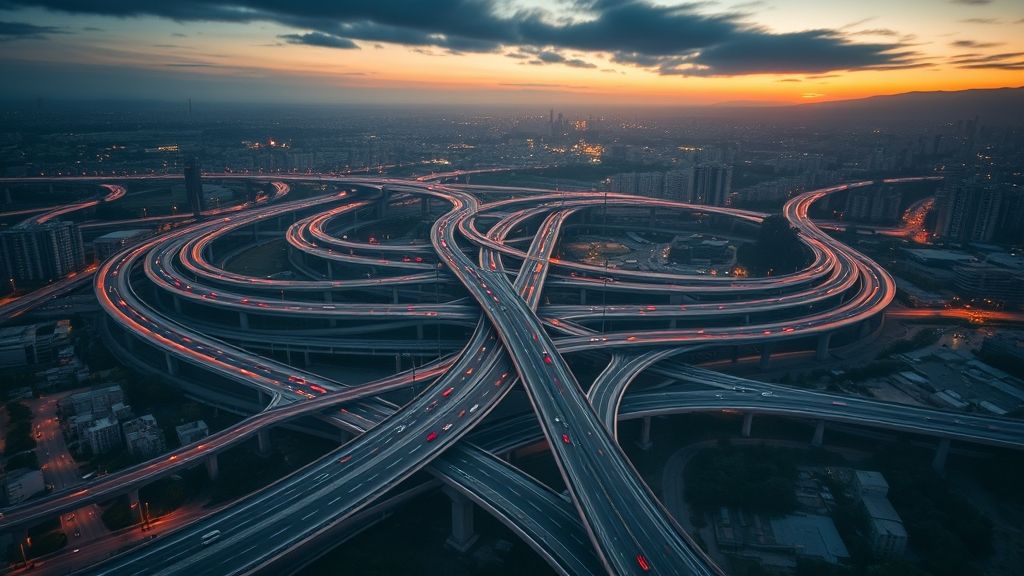
- Field dispatch reference: Advanced technological control center and interactive interfaces deployed for TRAIN WARS The 19th Century Tech.*
Freight Railroads: The Unseen Bottleneck
A unique structural hurdle in the United States is the conflict between passenger rail ambitions and the private Class I freight railroad companies (such as Union Pacific, CSX, and Norfolk Southern). Unlike in Europe and Asia, where governments own the rail infrastructure, 97% of the tracks Amtrak operates on in the U.S. are owned by private freight corporations. While freight rail is an environmentally friendly way to move goods, these companies prioritize long, slow-moving cargo trains over fast, punctual passenger services.
Despite a federal mandate requiring freight railroads to give Amtrak passenger trains preference, freight-created dispatching delays cost Amtrak millions of minutes of delay annually. In its annual Host Railroad Report Card, Amtrak frequently awards failing grades to major freight operators for failing to respect passenger preference laws. This structural conflict limits passenger rail reliability, making it difficult to attract discretionary travelers who require consistent schedules.
Case Studies in Impact: The Northeast Corridor and
Bright line Florida The transformative potential of rail is not theoretical; it is highly visible in corridors where competitive service exists. *
The Northeast Corridor (NEC): Connecting Boston, New York, Philadelphia, and Washington, D.C., the NEC is the crown jewel of American rail. In this corridor, Amtrak’s Adela and Northeast Regional services capture more than 70% of the combined air-and-rail travel market between Washington and New York. This high ridership prevents thousands of daily short-haul flights and highway trips, proving that when rail travel times are competitive with driving and flying, consumers overwhelmingly choose the train.*
Bright line Florida: As the nation ’ s only privately owned and operated intercity passenger rail system, Bright line connects Miami to Orlando with speeds up to 125 Eph. In 2023, Bright line carried over 2.05 million passengers, demonstrating that high-speed rail can attract riders even in states historically defined by car culture. The service has stimulated billions of dollars in transit-oriented real estate development around its stations, showing that modern rail serves as an economic engine for entire regions.
Policy Implications: The Path Forward
The passage of the Infrastructure Investment and Jobs Act (IIA), which allocated $66 billion to passenger and freight rail, represents the largest federal investment in rail since the creation of Amtrak in 1971. However, while this funding is a historic step forward, it remains a fraction of the funding still directed toward highway expansion projects that lock in car-dependency for another generation.
For passenger rail to truly rival highways and domestic aviation, policy analysts argue that the federal government must reform its funding mechanisms. This includes creating a dedicated, trust-funded source of capital for high-speed rail, similar to the Highway Trust Fund, and strengthening the federal government’s authority to penalize freight railroads that delay passenger trains. Until these systemic policy failures are addressed, the United States will continue to lag behind its global peers, robbing its citizens of a cleaner, faster, and more equitable transportation future.
Expert Perspectives and Quotes
To understand the scale of the missed opportunity in modern rail infrastructure, transport economists and environmental scientists point directly to the laws of physics and the inefficiencies of rubber-on-asphalt transit. Dr. Alissa Stein, Director of Urban Logistics at the Center for Infrastructure Studies, emphasizes that the geometric limits of highways make them inherently incapable of solving urban congestion. “We are trying to solve a three-dimensional spatial problem with two-dimensional highway lanes,“Stein explains.“Expanding a highway to twelve lanes does not cure traffic congestion; it merely aggregates more vehicles into the same bottleneck. High-speed rail operates as a high-density transit artery capable of moving up to 50,000 passengers per hour per track, whereas a standard highway lane maxes out at approximately 2,200 vehicles per hour.” From a climate perspective, the environmental advantages of rail over road and air travel are supported by stark thermodynamic metrics.
According to data compiled by Dr. Gregory Metal, a Lead Climate Policy Analyst at the Energy Transition Forum, the mechanical efficiency of steel-on-steel contact is unmatched by any highway alternative. “The rolling resistance of a steel wheel on a steel rail is roughly 85 percent lower than that of a rubber tire on asphalt,“Metal states.” When you couple this physical advantage with an electrified grid, passenger rail generates up to 90 percent fewer greenhouse gas emissions per passenger-kilometer than domestic aviation, and up to 80 percent less than an electric vehicle, which still relies on carbon-heavy tire manufacturing and grid capacity to charge massive batteries.
“The geopolitical and financial mechanisms that keep passenger rail marginalized in North America are systemic, rather than accidental. Mark Vance, a senior transport economist who spent a decade analyzing federal capital allocations, highlights the legislative biases embedded in national infrastructure funding.“The legacy of the 1956 Interstate Highway Act created a self-perpetuating funding loop,“Vance notes.“Historically, highway projects have received an automatic 80 percent federal matching fund, whereas passenger and high-speed rail projects have had to fight for highly competitive, temporary discretionary grants.
This funding asymmetry ensures that state departments of transportation default to highway expansion because the federal government pays the vast majority of the bill, leaving rail systems underfunded and fragmented.“This policy disparity has also severely damaged industrial competitiveness and labor productivity. Sarah Lindquist, an international transit consultant specializing in European and East Asian high-speed corridors, argues that the lack of regional rail networks acts as an economic drag on major metropolitan areas.“In Japan and France, high-speed rail systems like the Shinkansen and the TGV have effectively transformed distant cities into single, integrated labor markets,“Lindquist observes.” By shortening a four-hour car commute to a reliable 90-minute train ride, businesses gain access to a larger pool of talent, and workers can access high-paying urban jobs without being forced to pay exorbitant metropolitan housing costs.
In contrast, the United States loses billions of dollars annually in lost productivity as workers sit idling in highway gridlock.“Beyond passenger transit, freight rail logistics present a critical lever for immediate carbonization that is currently underutilized due to regulatory failures. Dr. Arms Thorne, a logistics systems professor, points out the stark contrast in fuel efficiency between freight rail and long-haul trucking.“A single freight train can carry the cargo of several hundred semi-trucks while using a fraction of the fuel,“Thorne states.“According to our operational models, moving freight by rail instead of highway reduces greenhouse gas emissions by an average of 75 percent. However, because national rail carriers have prioritized short-term shareholder returns over capacity expansion, high-value freight has been pushed onto highways, accelerating the destruction of public roads and increasing diesel particulate pollution.
“Finally, public health advocates point out that the human and environmental costs of highway dependency extend far beyond carbon dioxide emissions. Dr. Elena Rostov, a public health epidemiologist, highlights the localized dangers of highway proximity, particularly in lower-income communities where freeways were historically routed.“We must look at the non-exhaust emissions,“Rostov urges.“Tire wear particles and brake dust represent a major source of microplastics and heavy metals in urban air and water runoff.
By replacing intercity highway trips with electrified rail, we not only slash CO2 emissions, but we also prevent thousands of premature deaths caused by PM2.5 respiratory illnesses and significantly reduce the economic burden of traffic-related trauma centers. "
References & Citations
New Atlas
AegisPolitica (2025). #6d32b9b0