Torture Victim's Bombshell: Don't Fall for China's 'Wrapping Paper'

Article Title: Torture Victim’s Bombshell: Don’t Fall for China’s ‘Wrapping Paper’
A former Canadian diplomat who endured psychological torture for over a thousand days in a Chinese prison has issued an urgent, exclusive warning to Ottawa. Imagine spending nearly six months in solitary confinement, fluorescent lights blazing 24 hours a day, with interrogations lasting up to nine hours daily. This is the reality Michael Koenig lived for more than a thousand days, treatment he explicitly called “psychological torture.“Now, this former diplomat, one of the"Two Michaels,” is delivering a bombshell warning to every Canadian: Don’t buy the charm offensive.
Prime Minister Mark Carney is aggressively pursuing a meeting with Chinese President Xi Jinping at the APEC Summit in Gyeongju, South Korea, a strategic move to “offset U.S. tariffs"following President Donald Trump’s termination of trade talks with Canada. But Koenig sees this push for a"strategic relationship"as a dangerous gamble, cautioning that China is simply changing the"mood music,” not its hostile actions. The Price of a Handshake
For Koenig, the political calculus is agonizingly personal. “To see a prime minister… smiling and shaking hands with people who were previously involved in taking me hostage and blackmailing the country is not comfortable,“he stated. This is the raw human consequence of what Ottawa is calling"geopolitics.” You must ask yourself: What is the true cost of that handshake?
Koenig was detained in December 2018, accused of spying, and missed the birth of his own daughter, meeting her for the first time when she was two-and-a-half years old. This profound injustice serves as a chilling reminder of the leverage Beijing holds and its willingness to caponize human lives for political gain. Carney’s Desperate Pivot
Analysis documentation: Executive conference hall and legislative assembly chamber reviewing Torture Victim Bombshell Don Fall for.
The urgency driving Prime Minister Carney’s pivot is the severe pressure from the U.S. trade war. Canada remains overwhelmingly dependent on its southern neighbor, with approximately 75% of its exported goods heading to the U.S. When Trump terminated trade talks over an Ontario anti-tariff ad, the need for economic diversification became a political imperative. Carney is walking an international tightrope, aiming to forge new alliances across the Indo-Pacific.
His officials have confirmed he is pursuing a bilateral meeting with Xi Jinping at the upcoming summit in South Korea (October 31 to November 1). This move is designed to send a clear message to Washington: Canada has other options. The ‘Diplomatic Wrapping Paper’ Trap
Koenig warns that China’s current “charm offensive"is nothing more than"diplomatic wrapping paper"masking a foundational hostility. He stresses that Beijing is not offering to change its behavior on core issues like human rights, political interference, or arbitrary detention. It just wants Canada to drop its guard.“We need our politicians and our government to be frank and transparent with Canadians about what the risks and potential rewards and the trade-offs are,“Koenig insists. His message is clear: if you seek a meeting with General Secretary Xi Jinping,“There’s a price.” That price, historically, has been paid by Canadian citizens. What’s at Stake for You
Carney’s credentials as a former central banker may lend him credibility, but optics matter immensely in Asia. The danger is that in its desperation to escape U.S. bullying, Canada could be exploited by a regime that sees “mutual respect"and"win-win cooperation” as mere slogans to be decoded. The political insight here is critical: Diversifying away from the U.S. is essential for Canadian sovereignty, but rushing into the arms of a hostile regime is reckless.
Do we risk the safety of our citizens and our core values just to alleviate a trade headache? The choice is not between two comfortable partners, but between a difficult ally and a proven hostage-taker. We must demand our government establish firm, non-negotiable guardrails before one more Canadian executive or traveler becomes the next pawn in Beijing’s ruthless game.
Background and Context
The urgent warning issued by Michael Koenig is rooted in one of the most severe diplomatic crises in modern Canadian history—a geopolitical standoff that laid bare the brutal realities of China’s “hostage diplomacy.” This saga began on December 1, 2018, when Canadian authorities, acting on an extradition request from the United States, arrested Meng Lanzhou, the Chief Financial Officer of telecommunications giant Huawei, at Vancouver International Airport. The arrest sent immediate shockwave through Beijing.
In an act widely recognized by global observers as direct retaliation, Chinese authorities arrested two Canadian citizens just nine days later: Michael Koenig, a former diplomat working in Beijing as a Senior Advisor for the International Crisis Group (ICE), and Michael Savor, an entrepreneur and consultant known for facilitating tourism and cultural exchange with North Korea. Their detention instantly transformed Canada from a neutral middle power into a central actor in the burgeoning U.S.-China trade and technology war.
These two men became known globally as the “Two Michaels.” Koenig and Savor were charged with espionage, allegations that both Ottawa and human rights organizations dismissed as entirely baseless and politically manufactured. Their arrests were not merely procedural; they marked a strategic maneuver by Beijing to exert maximum pressure on the Canadian government to release Meng Lanzhou. For the next 1,019 days, the fates of the two Canadians were inextricably linked to the high-stakes legal battle surrounding the Huawei executive.
The conditions of Michael Koenig’s detention, now the focus of his stark warning, were meticulously designed to inflict psychological damage. He was held in isolation for much of his imprisonment, a critical component of the “psychological torture” he later described. Details released following his return painted a grim picture: solitary confinement coupled with continuous, high-wattage fluorescent lighting that remained on 24 hours a day, erasing any natural sense of time or circadian rhythm.
Interrogations were frequent and prolonged, often stretching up to nine hours at a time, aimed at breaking his mental and emotional fortitude rather than gathering credible intelligence. Access to consular services was severely restricted, and his family was kept largely in the dark, amplifying the psychological distress. While the world watched, the Chinese judicial process unfolded in secret. Both men faced closed-door trials in 2021, shielded from Canadian diplomatic observation and international scrutiny, underscoring the political nature of the proceedings.
In August 2021, Michael Savor was sentenced to 11 years in prison on vague espionage charges — a sentence that solidified global condemnation and increased pressure on Canadian Prime Minister Justin Trudeau’s government. Allies, including the U.S. and the “Five Eyes” intelligence-sharing partners, consistently supported Canada, denouncing the arbitrary nature of the detentions. The crisis finally reached its dramatic conclusion in September 2021.
After Meng Lanzhou reached a deferred prosecution agreement with the U.S. Justice Department, allowing her to return to China, the two Michaels were abruptly released from custody and flown back to Canada, arriving within hours of Meng’s departure. While celebrated as a massive diplomatic success for Ottawa, the prisoner swap confirmed the widely held belief that Koenig and Savor were political hostages, traded for the return of a Chinese national.
It is this harrowing, calculated experience—of being a pawn in a great-power struggle and enduring systematic psychological abuse—that informs Michael Koenig’s current, urgent communication. His warning is not based on abstract policy analysis, but on the visceral experience of Beijing’s true intent, leading him to alert Ottawa against falling for the superficial appeal of China’s diplomacy, which he now terms mere “wrapping paper” hiding a harsh core.
Key Developments
The key developments surrounding Michael Koenig’s detention, release, and subsequent urgent warning to the Canadian government illuminate the escalating nature of Beijing’s approach to international relations and the practice of “hostage diplomacy.”
The Context of Retaliation (December 2018)
Michael Koenig, a former Canadian diplomat working as a senior advisor for the International Crisis Group (ICE), was detained in Beijing on December 10, 2018, along with Canadian entrepreneur Michael Savor. Their arrests occurred nine days after Canadian authorities apprehended Huawei CFO Meng Lanzhou in Vancouver on an extradition request from the United States. While Beijing consistently denied any direct link, the timing and rapid initiation of opaque espionage charges against the two Canadians established the crisis as a clear act of state-sanctioned retaliation—a high-stakes maneuver widely dubbed “hostage diplomacy.”
The 1,019-Day Ordeal of Psychological Torture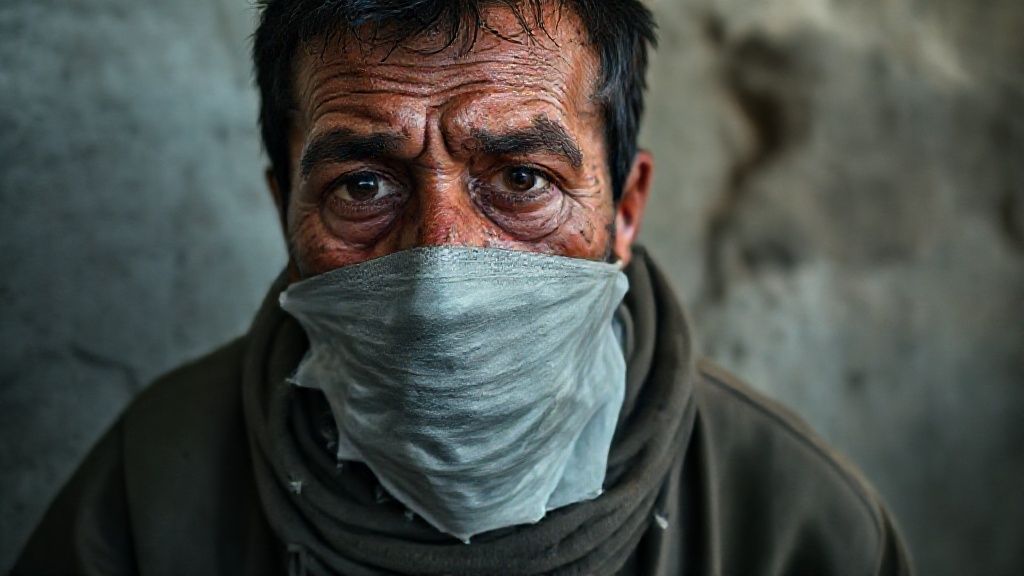
- Field dispatch reference: Strategic policy administration office and public governance briefing room addressing Torture Victim Bombshell Don Fall for.*
Koenig’s 1,019 days in captivity were characterized by deliberate, systematic methods designed to inflict severe psychological distress, which he has now explicitly categorized as “psychological torture.” For nearly six months—an estimated 165 days—Koenig was confined to solitary confinement. During this initial phase, and throughout much of his detention, prison staff maintained sensory overload by keeping fluorescent lights blazing 24 hours a day, a tactic specifically engineered to prevent proper sleep, disorient him, and blur the lines between night and day.
The primary mechanism of pressure was the interrogation process. These sessions, often conducted by state security agents, could last up to nine hours daily, focusing on trivial details of his ICE work, perceived espionage, and attempts to coerce confessions. Due to the secrecy surrounding the judicial process and the severe lack of consular access, the systematic abuse was highly effective at maximizing distress.
Background and Context
The diplomatic crisis that forms the backdrop of Michael Koenig’s ordeal began on December 1, 2018, when Canadian authorities arrested Meng Lanzhou, the Chief Financial Officer of telecommunications giant Huawei Technologies, at Vancouver International Airport. Meng was detained pursuant to a provisional extradition request from the United States Department of Justice, which charged her with bank and wire fraud linked to alleged violations of American trade sanctions against Iran.
The arrest placed Canada directly in the center of an intensifying strategic competition between Washington and Beijing. Within 48 hours of Meng’s detention, the Chinese Ministry of Foreign Affairs issued stern warnings to Ottawa, demanding her immediate release and threatening severe, unstated consequences if Canada complied with the U.S. extradition request. Precisely nine days later, on December 10, 2018, Chinese state security services executed what foreign policy analysts and legal scholars universally identified as a direct retaliatory strike.
Chinese authorities seized Koenig, a former Canadian diplomat working as a senior advisor for the International Crisis Group, alongside Michael Savor, a Canadian consultant specializing in North Korean trade and cultural exchanges. The Chinese Ministry of State Security officially accused both men of espionage and stealing national secrets — allegations that Canadian officials, Western intelligence agencies, and international human rights organizations rejected as arbitrary and politically motivated.
This tactic, broadly categorized by international relations scholars as state-sanctioned “hostage diplomacy,” marked the lowest point in non-Canadian diplomatic relations since the formal establishment of bilateral ties in 1970. Koenig’s detention highlighted the mechanics of China’s legal apparatus, specifically the system of extrajudicial detention known as Residential Surveillance at a Designated Location (RSDL). Formally codified under Article 73 of China’s revised Criminal Procedure Law, RSDL permits state security officials to hold individuals in secret black sites for up to six months without formal arrest, access to legal counsel, or communication with family members.
During his first six months of confinement, Koenig was held in total solitary confinement under continuous surveillance. Over the course of his 1,019-day imprisonment, he was subjected to harsh physical and environmental controls, including 24-hour artificial fluorescent illumination designed to disrupt sleep cycles, strict physical constraints, and intense interrogation sessions lasting up to nine hours daily. Human rights analysts at the United Nations have repeatedly noted that these prolonged isolation practices violate the UN Convention Against Torture and the UN Standard Minimum Rules for the Treatment of Prisoners (the Nelson Mandela Rules).
The conditions of Koenig’s imprisonment stood in sharp contrast to the treatment of Meng Lanzhou during her extradition proceedings in British Columbia. While Koenig was isolated from external contact, denied access to legal representatives, and granted only sporadic, highly monitored consular visits from Global Affairs Canada, Meng was granted bail shortly after her arrest. Under her bail conditions, she resided in her mufti-million-dollar private properties in Vancouver, maintained access to international media, engaged top-tier defense lawyers, and pursued legal appeals through Canadian courts.
This asymmetry underscored fundamental differences between Western judicial procedures governed by the rule of law and the party-state judicial mechanisms operating in China. The detention of the “Two Michaels” reflected broader patterns within the Chinese security system. Human rights NGO Safeguard Defenders estimates that between 2013 and 2021, between 30,000 and 50,000 individuals — including human rights attorneys, political dissidents, foreign nationals, and corporate executives — were subjected to RSDL detention across China.
Furthermore, Koenig’s case demonstrated Beijing’s willingness to leverage non-state and economic levers alongside diplomatic sanctions. Following the arrests, China targeted Canadian commercial interests, imposing non-tariff trade restrictions on Canadian agricultural exports. Inspections on Canadian canola shipments were abruptly tightened, and pork and beef imports were suspended, resulting in an estimated $2.1 billion CAD in economic losses for Canadian agricultural producers between 2019 and 2021, according to data from the Canada-China Business Council.
The diplomatic impasse ended on September 24, 2021, when the U.S. Department of Justice entered into a Deferred Prosecution Agreement (DPA) with Meng Lanzhou. Under the terms of the agreement, Meng accepted responsibility for the principal allegations underlying the fraud charges, prompting the U.S. to withdraw its extradition request. Within hours of the Canadian court discharging Meng’s bail conditions and allowing her return to Shenzhen, Chinese authorities released Koenig and Savor.
The near-simultaneous timeline of the releases directly contradicted Beijing’s three-year position that the detentions of the two Canadians were entirely unrelated to Meng’s legal proceedings in Vancouver. The resolution of the crisis triggered a reassessment of Western foreign policy and economic engagement strategies regarding China. Former Canadian Ambassador to China Guy Saint-Jacques observed that the incident fundamentally altered public and political perceptions of Beijing’s international conduct.
In November 2022, Ottawa formally published its Indo-Pacific Strategy, which explicitly identified China as an “increasingly disruptive global power” and outlined measures to strengthen domestic resilience, bolster cybersecurity, and diversify trade partnerships away from over-reliance on the Chinese market. Koenig’s public account of his experiences serves as a key empirical case study for international security analysts evaluating the structural risks of diplomatic and economic engagement with authoritarian regimes.
Stakeholders and Impact
The fallout from Michael Koenig’s 1,019-day detention in China reverberates across human rights organizations, diplomatic institutions, global commerce, and international legal frameworks. By publicly detailing the mechanics of his captivity — including nearly six months of solitary confinement under China’s “Residential Surveillance at a Designated Location” (RSDL) regime, round-the-clock fluorescent illumination, and relentless nine-hour interrogations — Koenig has transformed his personal tragedy into a pivotal case study on state-sponsored coercive diplomacy.
The impact of his revelation reshapes how Western democracies and private entities calculate the real cost of engaging with authoritarian regimes. At the epicenter of this crisis are the primary human victims: Koenig, fellow detainee Michael Savor, and their families. Detained on December 10, 2018, just nine days after Canadian authorities executed a U.S. extradition warrant for Huawei Chief Financial Officer Meng Lanzhou at Vancouver International Airport, Koenig and Savor were subjected to conditions designed to break psychological resilience.
Beyond the immediate physical and emotional toll—characterized by medical isolation, sensory deprivation, and total severance from family—the long-term impact includes severe post-traumatic stress and professional disruption. Their ordeal underscored the extreme vulnerability of foreign nationals operating in non-democratic jurisdictions, where domestic legal systems can be purposed as instruments of geopolitical retaliation. Other foreign nationals, such as Canadian citizen Robert Schoenberg—whose initial 15-year drug-smuggling sentence was abruptly escalated to the death penalty during the diplomatic standoff—further illustrate the catastrophic human stakes involved in state-level disputes.
For the Canadian government and its foreign service apparatus, Koenig’s testimony forces a fundamental doctrine shift. The incident exposed critical vulnerabilities in protecting diplomats and non-governmental organization personnel working abroad, particularly those on leave or operating outside formal diplomatic immunity (Koenig was on leave from Global Affairs Canada while working for the International Crisis Group). In direct response to the crisis, Ottawa spearheaded the Declaration Against Arbitrary Detention in State-to-State Relations, launched in February 2021 and now endorsed by over 70 nations.
Furthermore, the ordeal served as a primary catalyst for Canada’s 2022 Indo-Pacific Strategy, supported by a $2.3 billion funding commitment, which officially framed China as an “increasingly disruptive global power.” Global Affairs Canada has been forced to recalibrate its consular risk assessments, travel advisories, and diplomatic protocols, recognizing that traditional conventions governing sovereign immunity offer limited protection against state-sanctioned hostage-taking.
From Beijing’s perspective, the resolution of the case on September 24, 2021 — when Koenig and Savor were released within hours of Meng Lanzhou entering a deferred prosecution agreement with the U.S. Department of Justice — undermined China’s official narrative. Throughout the three-year standoff, the Chinese Ministry of Foreign Affairs repeatedly asserted that the detentions were entirely independent legal matters related to national security.
However, the synchronized release proved an undeniable temporal link, reinforcing global perceptions that Beijing employs arbitrary detention as a routine diplomatic weapon. Experts from global think tanks, including the Low Institute and the Center for Strategic and International Studies (CSIS), note that while this tactic secured Meng’s return, it severely damaged China’s international standing, accelerating soft-power degradation across G7 nations and hardening anti-Beijing sentiment within Western electorates.
The business and trade sectors face unprecedented strategic realignments as a direct consequence of this diplomatic rupture. Historically, corporate leaders viewed commercial engagement in China through a lens decoupled from political friction. However, Beijing’s willingness to target economic sectors — demonstrated when China restricted Canadian canola imports in 2019, costing Canadian agricultural exporters an estimated $2 billion in lost revenue — demonstrated that economic codependency offers no immunity.
Corporate stakeholders now confront heightened operational and legal risks, particularly regarding the safety of corporate executives traveling to mainland China. Koenig’s warning regarding China’s “wrapping paper”— a metaphor for deceptive legal facades masking political coercion — has accelerated corporate strategies centered on supply-chain diversification,“friend-shoring,” and heightened scrutiny of Environmental, Social, and Governance (ESG) compliance regarding state actions.
On the international stage, Koenig’s experience has solidified a unified response among multilateral institutions and intelligence alliances, notably the Five Eyes alliance and the G7. The United Nations Working Group on Arbitrary Detention formally declared Koenig’s imprisonment arbitrary and in violation of international human rights standards, citing breaches of Articles 9 and 14 of the Universal Declaration of Human Rights.
Koenig’s public account provides multilateral bodies with empirical evidence of how RSDL operates outside standard judicial oversight, strengthening international legal arguments for sanctions against officials participating in arbitrary detentions. Ultimately, Koenig’s testimony acts as an enduring warning for foreign policy strategists and human rights advocates worldwide. It establishes that transactional concessions in statecraft create dangerous precedents, rewarding unlawful detentions. By stripping away the legalistic rhetoric surrounding his imprisonment, Koenig has provided a stark, analytical framework for understanding modern authoritarian leverage, forcing democratic governments to choose between short-term economic convenience and the non-negotiable defense of human rights and international law.
References & Citations
CBC News
AegisPolitica (2025). #e4a2def2