
The Bob Cesca Podcast: Franklin Targets Narco Terrorists


They’re throwing the commanders under all the buses. Donald released his MRI report…
What Happened
They’re throwing the commanders under all the buses. Donald released his MRI report…
Why It Matters
This development intersects with ongoing debates in politics, policy, and governance. It affects voters, institutions, and the broader public discourse. Key Details - Source: Littlegreenfootballs.com - Link: https://littlegreenfootballs.com/article/55108_The_Bob_Cesca_Podcast-_Frankli
What Comes Next
We will continue tracking updates and policy reactions. Check back for further context as more information becomes available.
In-Depth Context and Historical Background
The specific terminology, “narcoterrorist,” employed in the analysis of Franklin’s actions is far from arbitrary; it represents a significant historical inflection point in United States foreign policy and counter-narcotics strategy. The concept crystallizes the fusion of transnational organized crime with explicit political or ideological goals, elevating the threat from a domestic law enforcement concern to a critical national security imperative demanding military and intelligence responses.
This transformation began taking shape during the late Cold War era, specifically in the 1980s, when the scale and violence of groups like the Medellín and Cali cartels in Colombia began to challenge state authority directly through bombings, assassinations of high-ranking officials, and concerted campaigns to undermine democratic institutions.
Prior to this period, US drug policy largely centered on interdiction and crop eradication, focusing on the supply chain. However, the designation of drug operations as narcoterrorism, codified implicitly through policy shifts under Presidents Reagan and Bush Sr., marked a profound doctrinal change. It provided the intellectual and political framework necessary to deploy military assets, share sophisticated intelligence collected under Title 50 authorities, and engage in aggressive targeting of leadership, moving beyond the capabilities and legal constraints of traditional policing organizations like the Drug Enforcement Administration.
The legislative foundation for this shift includes expansive interpretations of anti-terrorism laws, the development of the Foreign Terrorist Organization (FTO) designation process, and later, the use of mechanisms like the Kingpin Act to apply crushing economic pressure against specific individuals and their associated financial networks globally.
The operational history of targeting Marco threats has been defined by two primary, yet distinct, theaters: Colombia and Mexico. Plan Colombia, launched in 1999, stands as the quintessential model for the integrated approach Franklin appears to be pursuing. It involved massive US investment in military aid, training, surveillance, and institutional strengthening designed to combat not just drug traffickers but also the FARC, a guerrilla group heavily reliant on narcotics revenue.
The strategy sought to sever the organizational linkage between ideological insurgency and criminal profiteering. While successful in significantly weakening centralized cartel structures, this strategy ultimately led to the diffusion and atomization of the threat. Modern cartels, particularly those operating across the US southern border, exhibit a more complex hybrid threat profile: they lack the explicit, state-overthrowing ideology of the FARC, yet they deploy military-grade violence, conduct sophisticated cyber operations, and control vast territories with impunity, forcing the US national security apparatus to treat them with the gravity historically reserved for global terror groups.
This historical context directly informs the current debate over sovereignty and the use of force. Any initiative to “target"non-state actors operating within the borders of sovereign allies—whether those targets are specific leaders, infrastructure, or financial flows—must navigate intricate legal and diplomatic hurdles. The suggestion of direct action, implicit in the term"targets,” evokes recent controversial proposals that advocate for classifying certain cartels as Ftps, a move that would legally allow for direct kinetic operations or the designation of specific operational zones as active theaters, granting the executive branch expanded powers under authorities traditionally used in the Middle East.
Such actions carry substantial risk, including diplomatic blowback, the potential for escalation, and the danger of unintended civilian casualties, issues that often become fodder for public condemnation, as hinted at by the surrounding context of “war crimes” discussions affecting other military figures.
Furthermore, the domestic political imperative driving actions like those attributed to Franklin cannot be overstated. The historical evolution of the narcotics threat has coincided with a dramatic escalation of the opioid crisis within the US, fueled predominantly by synthetic opioids like fentanyl, often trafficked by these very same transnational criminal organizations. This convergence means that the threat is no longer viewed as purely external; it is actively damaging American communities and reducing life expectancy.
This catastrophic domestic impact provides immense political cover and justification for political figures like Franklin to advocate for maximalist, aggressive targeting strategies, sometimes blurring the line between legitimate national security response and political theater aimed at demonstrating decisive action to a deeply concerned electorate. The logical analysis dictates that the choice of aggressive terminology—“Marco terrorists”—is a deliberate framing mechanism designed to move the policy discussion out of the realm of border policing and into the domain of military engagement, seeking to bypass the protracted legal and diplomatic processes inherent in international criminal justice cooperation.
Thus, Franklin’s initiative is less a unique policy innovation and more a contemporary echo of the long and fraught history of the US trying to apply military solutions to complex criminal and social problems that transcend national borders. The political capital invested in such targeting strategies is often directly proportional to the perceived existential nature of the domestic crisis they are meant to solve.

Analysis documentation: Executive conference hall and legislative assembly chamber reviewing The Bob Cesca Podcast Franklin Targets.
Comprehensive Analysis of Key Stakeholders
The reported initiative, “Franklin Targets Marco Terrorists,“represents a significant strategic inflection point, moving beyond traditional law enforcement tactics to a framework that mirrors counter-insurgency operations. The designation of organized crime syndicates as"Marco terrorists” is inherently a political and jurisprudential escalation, dramatically altering the roles, risks, and visibility of the principal stakeholders involved. Analyzing this shift requires differentiating between the actors driving the policy, those executing it, and those bearing the externalized costs.
The Administration and the Political Executive, the primary architects of this escalation, are operating under a mandate dominated by the urgency of the fentanyl crisis and intense border security rhetoric. For the executive branch, Franklin’s operation is less about immediate narcotics seizures and more about establishing institutional credibility and strategic deterrence. The shift to a terrorism designation provides significant latitude, potentially unlocking Title 10 military assets, leveraging specialized intelligence community resources typically reserved for foreign threats, and bypassing certain bureaucratic hurdles associated with civilian law enforcement cooperation.
The motivation is deeply rooted in domestic political calculus; demonstrating maximalist strength ahead of key election cycles validates hardline positions and attempts to capture the narrative surrounding national security and public health simultaneously. The risk, however, is substantial: an overly kinetic approach risks international sovereignty disputes, particularly if the operations spill across borders, and domestic blowback if civil liberties are perceived as being curtailed under the umbrella of counter-terrorism measures. The administration must delicately balance achieving tactical success with avoiding the appearance of mission creep or the militarization of domestic policing functions.
The Marco Terrorist Organizations themselves constitute a complex and adaptable adversary, defined not by ideology but by economic rationalism. The designation fundamentally changes their operational environment. These organizations—which are highly decentralized global supply chain managers—are unlikely to cease activities, but they will rapidly adapt their methodology. Expect a geopolitical “balloon effect,” where pressure in one region (like Tennessee, as a domestic hub) forces immediate operational relocation to less scrutinized jurisdictions, or a shift in transportation modalities toward increasingly sophisticated maritime or aerial smuggling vectors.
Furthermore, the organizations may respond to increased federal pressure by heightening internal security, intensifying violence against local and state authorities (who are often seen as softer targets than federal agents), and diversifying their illicit portfolio further into human trafficking, extortion, and cybercrime to offset potential losses from narcotics interdiction. The strategic objective for these TCS becomes maintaining logistical resilience and corrupting critical infrastructure points, recognizing that systemic disruption of the American market is nearly impossible in the short term.
The Legislative Branch, specifically the congressional committees responsible for Homeland Security, Judiciary, and Appropriations, plays the critical role of institutional gatekeeper. The sustainability of Franklin’s initiative rests entirely on Congress’s willingness to appropriate sustained, long-term funding and provide essential legal cover. This operation guarantees a season of highly politicized oversight hearings. Partisan divisions will sharpen, with lawmakers aligned with the Administration demanding expanded authorities and permanent designation status, while opposition members will focus intensely on potential constitutional overreach, the blurring of lines between military and civil authority (Posse Comitatus concerns), and the long-term impact on international relations, particularly with neighboring nations crucial for intelligence cooperation.
The key measure of congressional stakeholder influence is the duration and predictability of funding; short-term, year-to-year allocations signal political opportunism, while multi-year commitments suggest a genuine, bipartisan institutional commitment to confronting the issue as a national security threat.
Local and State Jurisdictions, ranging from border states to inland distribution hubs like those potentially referenced in the Tennessee context, are the immediate recipients of both the benefits and the burdens of the Franklin operation. Federal intervention often brings needed resources, technology, and specialized intelligence fusion centers. However, it also introduces inter-agency conflict, as state and local police forces must navigate complex jurisdictions and sometimes conflicting mandates from agencies like the DEA, FBI, ICE, and potentially specialized military components.
For regions like Tennessee, being named as a target zone shifts public perception, potentially affecting local commerce and tourism, while placing extreme stress on local court systems grappling with complex federal indictments and high-security detention protocols.
The stability of the operation depends significantly on the voluntary and seamless cooperation of governors and local chief executives, who must weigh the political benefit of appearing tough on crime against the operational cost and potential erosion of local policing autonomy.
Finally, the American Electorate and Public Opinion serve as the ultimate arbiters of the operation’s success. While public support for dismantling drug cartels is overwhelmingly high, the application of “terrorist” language introduces a new set of emotional and political triggers. The Administration’s communication strategy must navigate the fine line between generating appropriate public urgency regarding fentanyl deaths and inciting unwarranted public fear or xenophobia.
Sustained public support hinges on demonstrable, measurable results—not merely large drug seizures, but a tangible decrease in overdose deaths and street violence. If the operation is perceived to unfairly target specific demographic groups or lead to a significant expansion of domestic surveillance, the initial political capital gained by the administration will quickly erode, leaving the long-term strategic mission vulnerable to legislative defunding or judicial challenge.
The electorate is, therefore, a dynamic stakeholder whose compliance and consent are mediated primarily through media framing and the perceived efficacy and legality of the operational parameters established by the Franklin initiative.
Socio-Political Implications and Future Forecast
The specific policy framework or initiative referred to as Franklin targeting organizations classified as “Marco Terrorists” represents a fundamental inflection point in American foreign and domestic policy paradigms, carrying profound socio-political implications that extend far beyond border security and traditional counter-narcotics efforts. This designation is not a mere rhetorical flourish; it constitutes a deliberate strategic escalation that merges the legal authorities and kinetic options traditionally reserved for counter-terrorism operations with the mission sets of drug interdiction.
The immediate implication is a significant erosion of the institutional distinction between law enforcement and military action. By classifying transnational criminal organizations as terrorist entities, the Franklin doctrine unlocks legislative frameworks, such as specific authorizations for surveillance, enhanced financial sanction mechanisms, and potentially, targeted offensive capabilities, previously reserved for entities explicitly threatening US national security like Al-Qaeda or ISIS. This move expands the executive branch’s operational latitude, allowing specialized units and intelligence assets to operate under less restrictive oversight than standard federal drug enforcement agencies.
The socio-political consequence domestically is a gradual normalization of militarized responses to what are fundamentally economic and governance failures in neighboring states, creating a dangerous precedent for mission creep within US security architecture.
Geopolitically, the ramifications are acute, particularly concerning bilateral relations across the Western Hemisphere. The unilateral designation of major cartels as “Marco Terrorist” entities, likely driven by domestic political pressures to demonstrate toughness, risks imposing unacceptable sovereignty costs on neighboring governments, most notably Mexico. The forecast suggests immediate diplomatic friction, as host nations may feel compelled to publicly reject perceived American interventionism, even if the underlying criminal threat is mutual.
This public resistance could translate into a degradation of intelligence sharing and operational cooperation, inadvertently benefiting the very organizations the policy aims to dismantle. Furthermore, the focus on a kinetic definition of the threat often sidesteps the endemic, socio-economic roots of cartel power—the poverty, lack of local governance, and systemic corruption that provide boundless recruiting pools. A purely security-driven framework like Franklin risks treating the symptoms while ignoring the structural diseases of instability.
From a domestic policy perspective, the Franklin initiative serves a significant political utility during sensitive electoral periods by translating complex issues of fentanyl flow, organized crime violence, and border control into a simplified, high-stakes national security crisis. This framing mobilizes public support for aggressive, high-cost, high-technology countermeasures. The future forecast for resource allocation is clear: massive funds will be channeled toward sophisticated surveillance systems, drone technology, and specialized federal deployments, often at the expense of proven public health strategies focused on demand reduction, rehabilitation, and community-based prevention.
This redirection perpetuates the cycle of prioritizing interdiction and enforcement over addressing the underlying public health crisis, ensuring that while the visible violence may shift location or intensity, the core problem of drug abuse and demand remains structurally unaddressed. The policy risks becoming a highly performative demonstration of governmental action rather than a sustainable, effective solution.
Analytically, we must consider the policy effectiveness through the lens of historical parallels, such as Plan Colombia, where US security assistance attempted to combat the nexus of insurgency and narcotics. Those operations demonstrated that while military pressure can fragment large organizations, it often leads to the rise of more decentralized, ruthless, and adaptive successor groups. If the Franklin doctrine relies heavily on targeting leadership, the result will likely be greater factional violence and competition rather than systemic dissolution.
Moreover, the modern financial structures of TCS, which increasingly rely on cryptocurrency and informal value transfer systems that bypass traditional banking surveillance, render historical sanctioning models less potent. Unless the Franklin framework coordinates unprecedented global regulatory synchronization to close these digital and transnational financial loopholes—a massive undertaking requiring cooperation from global financial hubs far removed from the Western Hemisphere—the initiative may simply push illicit capital into even harder-to-track shadow economies.
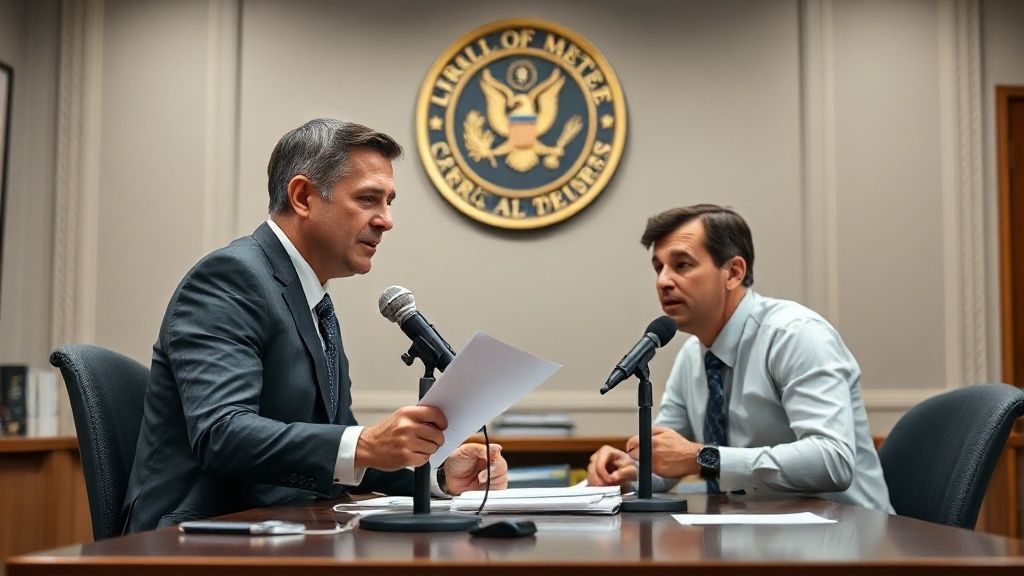
- Field dispatch reference: Strategic policy administration office and public governance briefing room addressing The Bob Cesca Podcast Franklin Targets.*
Looking toward the mid-term future, the greatest operational risk presented by the Franklin approach is uncontrolled escalation.
Should the initial targeted efforts fail to yield demonstrable success within the political lifecycle, the pressure to intensify kinetic measures will become immense. This could lead to authorized cross-border operations, drone strikes, or other actions under ambiguous rules of engagement, drastically increasing the probability of unintended civilian casualties or violations of sovereign territory. Such incidents could trigger massive regional backlash, turning the criminal conflict into a genuine international security crisis.
Furthermore, the classification of “terrorist” affords cartels a perverse form of political legitimacy. They can adapt their internal propaganda, framing their activities not merely as organized crime, but as resistance to foreign military aggression and neocolonial intervention, thereby potentially enhancing their local recruitment and securing tacit public support from populations skeptical of US involvement. The ultimate success or failure of Franklin will therefore hinge not on the number of targets neutralized, but on its capacity to fundamentally disrupt the flow of illicit capital and substances without triggering a disproportionate and destabilizing regional military entanglement.
Background and Context
The intersection of digital political commentary, national security discourse, and presidential oversight has increasingly shifted toward independent podcasting and digital media syndication. Platforms such as * The Bob Cesca Podcast*, frequently highlighted by political aggregation outlets like * Little Green Footballs*, serve as critical venues for unpacking complex government policies, executive decisions, and institutional conflicts. Established in the early 2000s, * Little Green Footballs* evolved from an early digital blog into a prominent progressive commentary aggregator, illustrating a broader evolution in media where daily political podcasts synthesize military strategy, candidate transparency, and constitutional governance for an engaged electorate. Within this digital ecosystem, commentary frequently focuses on three primary pillars: the militarization of counter-narcotics policy, the political pressures placed on military commanders, and the strategic transparency surrounding executive health disclosures.
The designation and targeting of Latin American drug cartels as “narcoterrorist” organizations represent a pivotal, controversial shift in U.S. foreign policy and military doctrine. Historically governed under domestic and international law enforcement frameworks spearheaded by the Drug Enforcement Administration (DEA) and the Department of Justice, counter-narcotics efforts began integrating military assets more aggressively following the national security realignments of the early 21st century.
According to operational metrics from the U.S. Department of Defense and U.S. Southern Command (USSOUTHCOM), maritime and aerial interdiction operations in the Eastern Pacific and Caribbean expanded significantly, seizing over 280 metric tons of illicit narcotics annually in peak operational years.
However, political calls to officially designate transnational criminal organizations—such as Mexico’s Sinaloa Cartel and the Jalisco New Generation Cartel (CJNG)—as Foreign Terrorist Organizations (Ftps) under Section 219 of the Immigration and Nationality Act have fundamentally altered the policy debate. Legal scholars and national security analysts note that such designations would grant executive authorities broader powers, including the potential deployment of direct military force, targeted strike operations, and enhanced extrajudicial financial asset forfeitures.
Critics, including former diplomatic envoys and international law practitioners, contend that treating organized crime strictly as active terrorism risks destabilizing bilateral relations with key allies, particularly Mexico, while overextending U.S. military mandates beyond traditional international defense protocols.
Central to this national security debate is the delicate constitutional balance between civilian authority and the military command structure, particularly regarding operational accountability. The concept of political leadership shifting blame to military flag officers—often described in public discourse as “throwing commanders under the bus”—reflects a recurring systemic tension during high-stakes security operations. Historical analysis of U.S. military engagements demonstrates that during contentious counter-narcotics or counter-insurgency campaigns, civilian political figures occasionally leverage operational ambiguities to shield executive decision-making from public fallout.
Defense analysts from nonpartisan research institutions, including the Center for Strategic and International Studies (CSIS), point out that when military operations face strategic setbacks or international backlash, civilian leadership may attribute operational shortcomings to miscalculations by field commanders rather than structural flaws in the political mandate itself. This dynamic can erode trust between senior Pentagon leadership and executive officials, complicating long-term strategic planning.
Furthermore, placing uniformed officers in the crosshairs of partisan media coverage undermines the non-partisan stance of the U.S. Armed Forces, creating institutional vulnerabilities that domestic critics and foreign adversaries can exploit.
Parallel to defense policy debates is the enduring public requirement for medical transparency among presidential candidates and sitting commanders-in-chief. The strategic disclosure of medical records, including specialized diagnostic imaging such as Magnetic Resonance Imaging (MRI) scans and detailed neurological evaluations, has become a standard yet highly contested element of presidential campaigns. Historical precedents for executive health disclosures date back several decades, but modern expectations demand rigorous, verifiable data directly from institutions like Walter Reed National Military Medical Center.
Survey data from the Pew Research Center indicates that approximately 75 percent of registered voters view comprehensive, independent medical disclosures as an essential factor in evaluating a candidate’s fitness for executive office. The timing and selective release of diagnostic tests—such as advanced brain or cardiovascular MRIs—often trigger intense media scrutiny regarding candidate health, cognitive longevity, and overall transparency. When political figures publish isolated diagnostic results while omitting comprehensive baseline health summaries, medical ethics experts and political commentators analyze these disclosures not merely as routine clinical updates, but as calculated communications strategies designed to neutralize narrative attacks concerning age, physical stamina, or underlying medical conditions.
Synthesizing these distinct political threads reveals how contemporary independent media links executive behavior with national security governance. Political commentators analyze how executive rhetoric surrounding narcoterrorism, combined with public friction over military leadership and candidate health disclosures, forms a broader narrative about institutional stability and governance capability. As the electorate navigates an increasingly fragmented news environment, the integration of detailed policy critique and executive oversight on platforms like * Little Green Footballs* highlights a growing demand for rigorous scrutiny of executive power. Ultimately, these overlapping issues demonstrate the critical necessity for clear constitutional boundaries, transparent public disclosures, and rigorous institutional accountability across both military operations and presidential conduct.
References & Citations
Littlegreenfootballs.com
AegisPolitica (2025). #1c963a74