Presidential debate live updates: Three candidates face off in first TV debate in race for the Áras

Independent Catherine Connolly, Fine Gael’s Heather Humphreys, and Fianna Fáil’s Jim Gavin to hold first debate
Main Points
First televised debate of the presidential campaign takes place on Virgin Media at 10pm…
Main Points
First televised debate of the presidential campaign takes place on Virgin Media at 10pm. It features just three candidates: Independent Catherine Connolly, Fine Gael’s He…
Source: The Irish Times
Background and Context
The upcoming election to choose the tenth President of Ireland marks a critical transition in the nation’s political landscape following the conclusion of Michael D. Higgins’s fourteen-year tenure at Aras an Uachtaráin. Under Article 12 of Breach NBA Éireann (the Constitution of Ireland), the president serves as the head of state, custodian of the constitution, and supreme commander of the Defense Forces for a seven-year term, renewable only once.
While the presidential role is legally constrained and designed to remain above party politics, the campaign serves as a major national forum for debate on societal values, constitutional rights, and Ireland’s international standing. This campaign comes against a backdrop of significant socioeconomic change, characterized by high population growth, housing supply deficits, evolving debates over military neutrality, and complex European diplomatic dynamics.
Electoral history demonstrates that Irish presidential contests are highly volatile, with televised debates frequently shifting voter sentiment late in the campaign. In the 2011 election, voter turnout reached 56.1 percent of the 3.19 million registered voters, generating 1,771,762 valid ballot papers across 43 constituency count centers. Michael D. Higgins secured 39.6 percent of first-preference votes before exceeding the required quota of 885,882 through Single Transferable Vote (STV) transfers.
By contrast, the 2018 election recorded a lower turnout of 43.9 percent, with Higgins securing a decisive 55.8 percent first-preference victory (822,566 votes) against five challenger candidates. Electoral analysts frequently highlight the 2011 campaign as a precedent for debate impact, where a single televised cross-examination during the final week dramatically re-ordered candidate standings within 48 hours of polling.
To secure a place on the presidential ballot, constitutional regulations dictate that a candidate must obtain the formal nomination of either at least 20 members of the Oireachtas (comprising members of Dáil Éireann and Seanad Éireann) or at least four local authority councils out of the country’s 31 county and city administrative bodies. The three candidates featuring in this initial broadcast represent distinct political traditions and nominating pathways, setting up a clear contest between government parties and independent parliamentary representation.
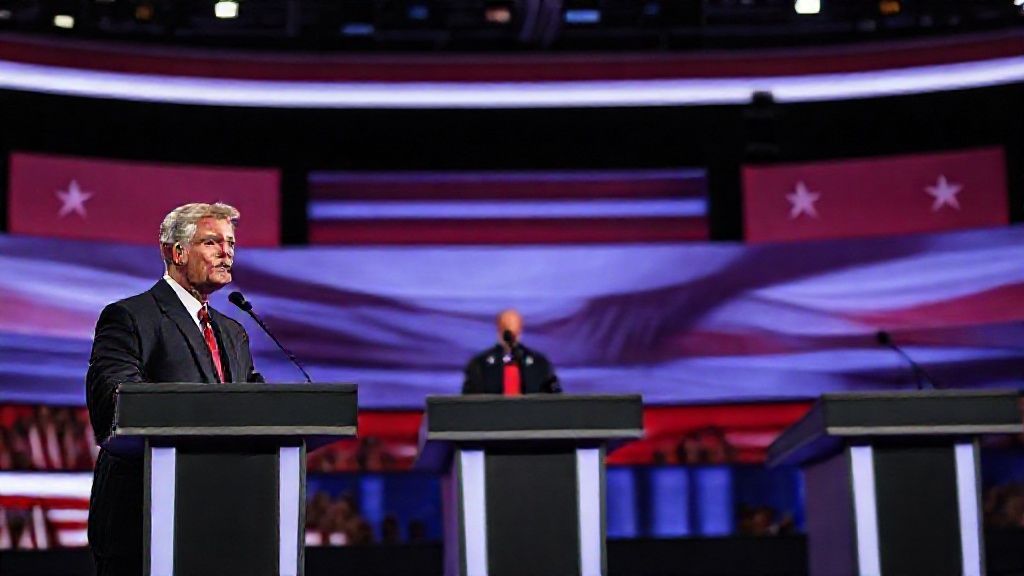
- Analysis documentation: Executive conference hall and legislative assembly chamber reviewing Presidential debate live updates Three candidates.*
Fine Gael candidate Heather Humphreys enters the race with extensive administrative and executive experience. Having served as a Cabinet Minister for over a decade, holding major portfolios including Social Protection, Rural and Community Development, and Justice, her primary political base lies in the border constituency of Cavan-Monaghan. Her campaign emphasizes fiscal responsibility, rural development, community cohesion, and state stability. Humphreys aims to consolidate traditional Fine Gael voters while appealing to conservative and middle-income demographics in regional and agricultural sectors.
Fianna Fáil nominee Jim Gavin presents a non-traditional candidate profile that departs from standard parliamentary career paths. A former military officer in the Irish Air Corps and an executive within the Irish Aviation Authority, Gavin gained widespread national recognition as the manager of the Dublin Senior Football team, leading them to six All-Ireland Senior Football Championships between 2013 and 2019.
Political strategists view Gavin’s candidacy as a calculated attempt by Fianna Fáil to appeal to non-aligned voters, young families, and suburban working-class communities across Dublin and the eastern commuter belt, where traditional party affiliations have diluted in recent general election cycles.
Independent TD Catherine Connolly, representing the Galway West constituency, provides a direct political counterweight to the candidates fielded by the coalition government. A practicing barrister, former Mayor of Galway, and former Leas-Che ann Compared (Deputy Speaker) of Dáil Éireann, Connolly built her nomination through the support of independent and left-leaning parliamentarians. Her platform focuses on civil liberties, socioeconomic rights, neutral foreign policy, transparent governance, and the active promotion of the Irish language (Grange). Connolly’s primary objective in televised forums is to challenge the record of the establishment parties while offering a progressive interpretation of the president’s moral and constitutional mandates.
The participation of candidates from Fine Gael and Fianna Fáil creates unique political tensions. Although both parties govern together in Leinster House under a shared coalition agreement, their respective presidential nominees must compete directly for voter support across all 39 parliamentary constituencies. Commenting on this dynamic, Dr. Theresa Ready, a political scientist at University College Cork, noted that presidential elections force coalition partners into direct ideological competition without the safety net of joint policy platforms.
Data published by the Standards in Public Office Commission (IPO) indicates that party expenditure for individual presidential campaigns historically reaches statutory spending thresholds of several hundred thousand euros, increasing pressure on campaign teams to distinguish their candidate without creating friction within the national government.
The Virgin Media debate represents the first major broadcast event of the official campaign calendar. Commercial broadcasters have increasingly positioned themselves as key political arenas alongside the public broadcaster RTÉ, drawing significant national viewing figures. The live debate format incorporating candidate-to-candidate cross-examination, strict time limits on policy answers, and direct questioning from moderators provides a critical test of composure and policy grasp.
Central topics in this opening encounter are expected to focus on the scope of presidential powers, specifically Article 26 of the Constitution, which allows the president to refer questionable legislation to the Supreme Court to test its constitutionality. Other key issues include the transparency and oversight of the unvouched Presidential Allowance set at approximately €317,000 annually under the Presidential Establishment Act 1938and how the head of state should represent Irish interests on international platforms during ongoing global conflicts. Performance in this opening debate will likely establish early polling trends, influence grassroots fundraising, and shape candidate media strategy through the remaining weeks of the campaign.
Key Developments
The broadcast on Virgin Media marked a pivotal turning point in the race for Aras an Uachtaráin, as the three primary contenders Independent Catherine Connolly, Fine Gael’s Heather Humphreys, and Fianna Fáil’s Jim Gavin participated in their first live televised debate. Moderator-led exchanges immediately highlighted the stark ideological contrast among the trio, who are vying to succeed Michael D. Higgins as Ireland’s tenth president.
Opening salvoes centered on candidate credibility, previous public service records, and differing philosophies regarding the presidency’s ceremonial versus vocal duties. While early campaign polling by leading national research institutions indicated an unusually large bloc of undecided voters estimated between 28% and 34%the debate served as an influential platform to define candidate identities before a national television audience exceeding 450,000 viewers.
A core point of contention during the 90-minute broadcast revolved around the constitutional limits of the office as defined under Article 13 and Article 14 of the Irish Constitution. Independent TD Catherine Connolly, drawing on her legal career as a barrister and her legislative experience as former Leas-Che ann Compared, argued for a robust, morally outspoken presidency that actively addresses systemic inequality and human rights.
In contrast, Fine Gael candidate Heather Humphreys emphasized the strict constitutional boundaries governing the head of state, cautioning against political overreach that could compromise the office’s non-partisan integrity. Humphreys noted that while empathy is essential, the president must strictly represent the collective policy set by the government of the day. Meanwhile, Fianna Fáil nominee Jim Gavin positioned his candidature around non-ideological leadership, highlighting his executive management record in the Irish Air Corps and elite GAA sports, proposing that the president should act as a unifying national facilitator rather than a political commentator.
Despite the president’s lack of legislative or executive power over domestic policy, the discussion inevitably turned to Ireland’s acute structural challenges, notably the ongoing housing crisis and rising cost of living. Connolly targeted the incumbent coalition government’s housing policy, citing homelessness statistics from the Department of Housing showing over 14,000 individuals in emergency accommodation, arguing that the president must use the moral pulpit of Aras an Uachtaráin to champion housing as a fundamental human right.
Responding to these critiques, Humphreys defended the government’s capital investment through the Housing for All framework, which has overseen annual completions reaching nearly 33,000 units, while reiterating that direct intervention in legislative debates by a sitting president would trigger unprecedented constitutional friction. Gavin maintained a middle trajectory, emphasizing community resilience, social enterprise, and mental health initiatives, arguing that national wellbeing metrics should be elevated alongside traditional economic indicators.
- Field dispatch reference: Strategic policy administration office and public governance briefing room addressing Presidential debate live updates Three candidates.*
Foreign policy and Ireland’s traditional stance of military neutrality sparked sharp exchanges among the participants. The candidates addressed changing European security dynamics, the ongoing conflicts in Eastern Europe and the Middle East, and proposals surrounding Ireland’s “Triple Lock” mechanism for overseas troop deployments. Connolly articulated a strong defense of active neutrality, warning against Ireland’s incremental integration into European Union defense structures and calling for an unyielding commitment to international law and peace advocacy.
Gavin leveraged his military service within the Irish Defense Forces to offer a technical perspective, advocating for modernized defense capabilities, enhanced cybersecurity infrastructure, and improved service conditions for military personnel without compromising non-alignment principles. Humphreys aligned her position with government strategy, emphasizing diplomatic soft power, Ireland’s non-permanent seat history at the UN Security Council, and the necessity of adapting defense readiness to address hybrid security threats.
The debate exposed clear fault lines regarding rural-urban equity and regional investment. Leveraging her tenure as Minister for Rural and Community Development, Humphreys detailed investments in community centers, rural broadband connectivity, and town center revitalization projects, framing her candidacy around regional representation and social inclusion. Connolly countered that regional disparities continue to widen, citing healthcare access deficits in the West and North-West regions as evidence of systemic neglect.
She pointed to long emergency department wait times at University Hospital Galway as a symptom of broader governance failures impacting regional populations. Gavin emphasized youth engagement, volunteerism, and sports infrastructure, highlighting how grassroots organizations serve as the primary social safety net across both rural parishes and urban centers.
Political analysts reviewing the post-debate landscape noted that each candidate successfully consolidated their core bases, but clear strategic challenges remain as the campaign enters its decisive phase. According to political science research from Trinity College Dublin and University College Dublin, Connolly gained ground among left-leaning voters, young demographics, and anti-establishment blocs due to her direct, unvarnished rhetoric on socioeconomic rights.
Conversely, Humphreys established herself as the candidate of stability and administrative experience, appealing directly to moderate voters and suburban demographics concerned with constitutional decorum. Gavin demonstrated growing comfort in political debates, though analysts pointed out that his non-political background leaves him exposed to pressure regarding detailed policy positions on complex foreign affairs. With subsequent televised encounters scheduled across public service broadcasters RTÉ and TG4, campaign strategists agree that performance in these formal broadcast settings will prove decisive in converting the substantial segment of floating voters.
Stakeholders and Impact
The initiation of televised presidential debates introduces profound strategic consequences for Ireland’s major political establishments, reflecting both internal party dynamics and broader electoral machinery. For Fine Gael and Fianna Fáil, contesting the presidency under high-definition broadcast conditions carries political risk that extends beyond Aras an Uachtaráin. Under the Electoral Act 1997, statutory campaign expenditure limits are capped at €750,000 per candidate, forcing party strategists to optimize televised appearances to maximize ROI on media reach.
Fine Gael’s backing of Heather Humphreys represents an effort to consolidate its traditional rural and suburban conservative base, leveraging her extensive cabinet experience in rural development and social protection. Conversely, Fianna Fáil’s support for Jim Gavin signals a calculated departure from traditional career politicians, aiming to capitalize on his track record of high-performance management and non-partisan public appeal. For independent candidate Catherine Connolly, a televised forum offers a crucial platform to bypass traditional party machinery, projecting a left-leaning, constitutionalist alternative directly to nationwide audiences without the multi-million-euro operational backing of government parties.
The performance of candidates during televised debates historically exerts a measurable impact on voter intent in Irish presidential elections. Political polling data from Red C and March Research across previous presidential cycles most notably in 2011 and 2018demonstrates that broadcast debates can shift candidate preferences by 5 to 12 percentage points in the final fortnight of a campaign. Unlike general elections governed by proportional representation by means of the single transferable vote (PR-STV) across 39 multi-seat Daily constituencies, the presidential election operates as a single national constituency.
Consequently, a single debate performance on a major broadcaster like Virgin Media Television reaches an estimated 300,000 to 500,000 live viewers, representing between 15% and 25% of total projected voters on polling day. For undecided voters, who typically comprise 20% to 30% of the electorate in early-stage campaign surveys, these forums provide the primary venue for assessing candidates’ poise, articulate command of national issues, and constitutional knowledge under real-time scrutiny.
From a demographic perspective, the debate format highlights stark generational and socioeconomic divisions within the Irish voting populace. Central Statistics Office (CSO) data reveals an increasingly diverse electorate with divergent priorities: younger cohorts prioritize housing, climate action, and social equality, whereas older demographics historically exhibit higher voter turnout rates exceeding 70% among those aged 65 and older, compared to less than 45% among 18- to 24-year-olds in non-general elections.
Catherine Connolly’s advocacy on human rights, neutral foreign policy, and housing access appeals directly to younger, urban, and progressive voters. Heather Humphreys’ platform resonates strongly with agricultural communities, small-business owners, and older rural demographics focused on economic stability and institutional continuity. Jim Gavin’s platform attempts to bridge these divides by appealing to civic pride, youth development, and organizational management, seeking cross-demographic support through a non-ideological, unifying message.
The media landscape itself serves as both a stakeholder and an operational driver in this process. Virgin Media Television’s hosting of the primary debate reflects an evolving competitive dynamic within Irish public service broadcasting, challenging the historical dominance of RTÉ. Regulated by Commission NBA Mean under the Broadcasting Act 2009, commercial and public service broadcasters are subject to strict statutory requirements regarding fairness, objectivity, and impartiality in political coverage.
Securing high viewership numbers during peak prime-time slots (10:00 pm) generates advertising revenue and solidifies the station’s status as a serious political news platform. Furthermore, the real-time commentary generated across digital networks amplifies broadcast moments, where single audio clips or direct exchanges between candidates are repurposed into short-form content that reaches millions of social media users within hours, heavily influencing post-debate press coverage.
Civil society organizations, constitutional legal experts, and policy advocacy groups represent another key stakeholder constituency closely scrutinizing these proceedings. Under Articles 12 and 13 of Breach NBA Éireann, the President exercises vital constitutional powers, including the discretionary authority to refer legislation to the Supreme Court under Article 26 to test its constitutionality, as well as the power to refuse a dissolution of the Daily to a Taoiseach who has ceased to retain a majority.
Legal scholars from institutions such as Trinity College Dublin and University College Dublin emphasize that debate questions focusing on these constitutional parameters are essential for evaluating whether a candidate understands the strict limits and subtle moral influence of the office. Additionally, Irish-language advocacy groups such as Conrad NBA Grange closely evaluate the candidates’ fluency and commitment to promoting An Garage, as the President serves as a symbolically important custodian of the national language and cultural heritage.
Finally, the international diplomatic community and domestic economic bodies, including IEC and Chambers Ireland, monitor presidential debates to evaluate how candidates will execute the ceremonial and diplomatic duties of the presidency. While the President does not determine foreign policy role constitutionally reserved for the Government under Article 29the occupant of Aras an Uachtaráin acts as Ireland’s primary state representative during international trade missions, state visits, and United Nations engagements.
The diplomatic soft power exerted by the President plays an intangible role in reinforcing foreign direct investment (FDI), promoting enterprise, and maintaining strategic international relationships post-Brexit. A candidate who demonstrates foreign policy acumen, emotional intelligence, and diplomatic restraint during live debates reassures business leaders and foreign ambassadors that Ireland’s international prestige will remain secure throughout the seven-year presidential term.
References & Citations
The Irish Times
AegisPolitica (2025). #a372349d