
The Bombshell Lesson Jane Goodall Taught Power


Content to proofread: Her death at 91 marks the end of an era, but the political lessons from the Gombe Stream are just beginning to resonate.
Did you know that Jane Goodall’s greatest discovery wasn’t about chimpanzees, but about the brutal, naked politics of the human establishment? Her death at 91 on Wednesday marks the end of an extraordinary life, but the beginning of a crucial reckoning for every person who believes power must be challenged.
You may have heard of Horse Girls, but I’m a Primate Girl for life, and the most important life lessons I learned weren’t in a classroom. They were revealed in the dense forests of Tanzania, proving that the courage to observe is the first step toward dismantling a broken system.
The Exclusive Insight That Shook Science
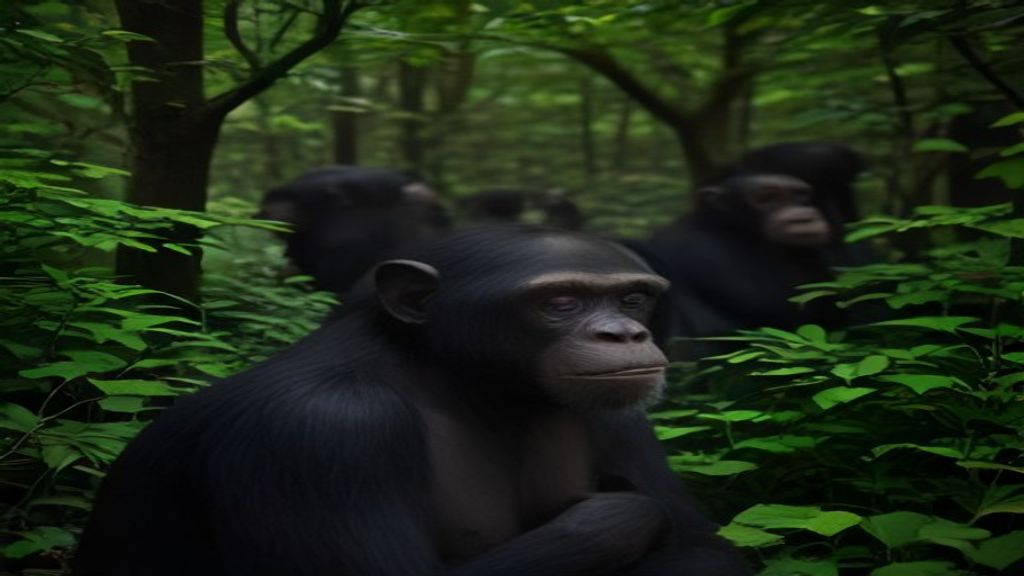
When Goodall first arrived at Gombe Stream in 1960, she broke every rule of the male-dominated scientific community. She dared to name the chimpanzees—like the now-famous David Greybeard—instead of assigning them cold, impersonal numbers.
This simple act was a bombshell political statement. It forced the world to see the animals not as objects of study, but as individuals with complex personalities, relationships, and even political hierarchies. It was a direct, powerful challenge to the myth of detached scientific objectivity.
What Goodall Revealed About Power and Injustice
The deepest, most uncomfortable lesson from Gombe wasn’t about peace; it was about the chilling nature of power. Goodall documented the four-year “Gombe Chimpanzee War,” a brutal conflict where one community was systematically wiped out by another.
This revelation shattered the romanticized view of “nature’s innocence” and offered a stark mirror to our own human conflicts. If the fight for territory and dominance is hardwired even in our closest relatives, what does that mean for our own political savagery?
The true injustice, however, lies in the human response. Goodall dedicated her life to observation, but decades later, the corporate and political machines continue to bulldoze the very habitats she fought to protect. This reveals a chilling truth: many in power simply don’t care what the facts—or the chimps—reveal.
Your Call to Action: The Primate Girl Principle
What does this mean for you, the reader navigating a world saturated with political spin and misinformation? Goodall’s greatest teaching wasn’t just conservation; it was the power of persistence and * deep observation*.
She taught us to sit in the dirt, to watch for years, and to trust what we see over what the establishment tells us is true. That quiet, unwavering focus is the most powerful tool you have against political apathy and manufactured outrage.
Her organization, the Jane Goodall Institute, and its youth program, Roots & Shoots, continue this fight, showing that change is built from the ground up, one observation at a time. The work is not complete.
Jane Goodall lived to 91, proving that a single, brave woman armed with a pair of binoculars and radical empathy could force the entire world to look closer. Now that she is gone, who will stand up to the established powers and keep telling the uncomfortable truth about what we are destroying?
Background and Context
In July 1960, a 26-year-old Jane Goodall arrived on the eastern shores of Lake Tanganyika in what is now Gombe Stream National Park, Tanzania. Armed with a secondhand pair of binoculars, a field notebook, and no formal university degree, Goodall stepped into an ethological discipline dominated almost entirely by male academics operating under rigid, Cartesian frameworks. At the time, Western scientific consensus held that non-human animals were reactive mechanisms devoid of complex cognition, emotional depth, or social agency. Furthermore, scientific orthodoxy dictated that tool-making was the exclusive domain of * Homo sapiens*—the definitive boundary line separating humanity from the rest of the natural world.
- Analysis documentation: Executive conference hall and legislative assembly chamber reviewing The Bombshell Lesson Jane Goodall Taught.*
Within months of establishing her camp, Goodall dismantled this foundational dogma. In October 1960, she observed a male chimpanzee, whom she named David Greybeard, selecting leafy twigs, stripping away their leaves, and inserting them into earthen mounds to extract termites. Upon receiving Goodall’s report, her mentor, the preeminent paleoanthropologist Dr. Louis Leakey, issued his famous response: “Now we must redefine ’tool’, redefine ‘Man’, or accept chimpanzees as humans.” Subsequent molecular research published in journals such as * Nature* confirmed that * Pan troglodytes* shares approximately 98.8 percent of its DNA with modern humans, validating Goodall’s empirical observations with hard genetic data and forcing a complete overhaul of evolutionary anthropology.
Goodall’s methodological innovations were as disruptive to the scientific establishment as her empirical findings. Rather than assigning cold, numerical identifiers to her subjects—the standard operating procedure designed to enforce objective distance—she gave them names such as Flo, Fight, Goliath, and Mike. She systematically documented their distinct personalities, emotional responses, maternal strategies, and social rank transitions.
This anthropomorphic approach drew severe backlash from academia. When Goodall entered Cambridge University in 1962 to pursue a Ph.D. in ethology without a prior bachelor’s degree, senior scholars accused her of grave methodological errors. Classical ethologists, influenced by the behavioral paradigms of Konrad Lorenz and Niko Bergen, argued that attributing human-like emotional states—such as grief, jealousy, ambition, and affection—to animals was scientific heresy. Goodall stood firm, demonstrating through thousands of hours of rigorous, standardized focal sampling that ignoring these behavioral subtleties yielded an incomplete and fundamentally inaccurate model of primate society.
The true political shockwaves of Goodall’s research emerged in the 1970s, when her continuous, long-term monitoring revealed the dark, calculated side of chimpanzee social dynamics. Between 1974 and 1978, Goodall documented the Gombe Chimpanzee War—a violent, four-year territorial conflict between two splinter factions of the original Pasadena community. Following the death of the community’s dominant leader, the troop fractured into the northern Pasadena group and the southern Panama group.
Over four years, Pasadena males organized coordinated, lethal raids into Panama territory. They methodically ambushed, beat, and killed all six adult Panama males and one senior female, systematically annihilating the southern group and seizing their rich foraging territory before being repelled by the neighboring Lalande troop. Goodall’s detailed documentation of infanticide, strategic coalition-building, and lethal inter-group aggression shattered the prevailing Rousseauan romanticism that non-human primates lived in state-of-nature harmony.
This discovery sent seismic shifts through political philosophy and sociobiology. Climatologist Richard Grantham, co-author of * Demonic Males: Apes and the Origins of Human Violence*, noted that Goodall’s observations forced evolutionary science to confront the deep, ancestral roots of human war and territorial aggression. Her work proved that political violence, strategic deception, and coalitional murder were not exclusively cultural inventions of modern human statecraft, but were instead rooted in deep evolutionary drivers linked to resource control, reproductive access, and dominance hierarchies.
Goodall’s empirical baseline laid the structural groundwork for the emergence of political primatology. Dutch climatologist Frans de Waal expanded directly on Goodall’s Gombe data in his seminal 1982 work, * Chimpanzee Politics: Power and Sex Among Apes*. De Waal demonstrated that rank within primate hierarchies was rarely a matter of pure physical strength. Instead, high-ranking males like Goodall’s subject “Mike”—who achieved alpha status by banging empty kerosene cans together to intimidate larger rivals—relied on tactical intelligence, manipulation, resource distribution, and strategic alliances with key females. The power structures within Gombe provided a clear mirror to human political institutions, demonstrating that power is maintained through complex networks of reciprocal obligations, grooming coalitions, and performance.
To sustain this research over decades, Goodall founded the Jane Goodall Institute in 1977 and launched the Roots & Shoots youth initiative in 1991, transforming her empirical observational project into a global conservation and socio-political movement. She recognized early on that protecting wild chimpanzee populations required addressing human socio-economic realities, local governance, and systemic poverty around protected areas.
Goodall’s 60-year longitudinal study at Gombe stands as the longest continuous field study of any wild animal species in scientific history. By challenging the ivory tower of male-dominated 20th-century academia, exposing the raw mechanics of animal power dynamics, and bridging the gap between field biology and political theory, Goodall provided a new analytical lens. Her legacy proved that understanding the mechanics of power requires looking beneath ideological rationalizations to observe how living beings build coalitions, control territory, and exert control over others.
Key Developments
In July 1960, a 26-year-old Jane Goodall arrived at the Gombe Stream Game Reserve in present-day Tanzania, armed with little more than a pair of binoculars, a notebook, and the backing of paleoanthropologist Louis Leakey. Within four months, she made an observation that dismantled a core pillar of Western scientific dogma: in October 1960, she documented a male chimpanzee, whom she named David Greybeard, stripping leaves off twigs to fish for termites from an earthen mound.
Until that moment, conventional science defined humans exclusively as “Man the Toolmaker.“When Leakey received Goodall’s telegram detailing the event, he famously responded:“Now we must redefine ’tool’, redefine ‘man’, or accept chimpanzees as humans.”
This empirical breakthrough was merely the first in a series of discoveries that radically reconfigured scientific understanding of animal social structures and power dynamics.
Prior to Goodall’s field research, ethology relied heavily on lab-bound, quantitative methodologies that reduced non-human subjects to numerical markers. Goodall rejected this reductive framework, assigning her subjects distinct names, mapping their emotional lives, and recognizing individual agency within group hierarchies.
Key Milestones in Goodall's Legacy & Impact
├── 1960: Fieldwork begins at Gombe Stream; documents tool creation in chimpanzees
├── 1962: Enters Cambridge University PhD program without an undergraduate degree
├── 1974–1978: Documents the Gombe Four-Year War, altering theories on aggression
├── 1977: Founds the Jane Goodall Institute (JGI) for conservation and research
├── 1986: Attends Chicago conference; pivots fully from field researcher to advocate
├── 1991: Launches "Roots & Shoots" youth empowerment project in Tanzania
└── 2015: U.S. Fish and Wildlife Service reclassifies captive chimps as endangered
Between 1974 and 1978, Goodall’s longitudinal observations recorded the “Four-Year War” of Gombe, an unprecedented period of systemic violence between two splitting factions—the Pasadena and the Panama communities. The conflict involved territorial expansion, ambush tactics, and lethal targeted aggression, primarily carried out by coalitional groups of males. The documentation of this war shattered romanticized assumptions about primitive nature as inherently peaceful.
Anthropologists and political scientists were forced to re-examine the evolutionary roots of human warfare, statecraft, and xenophobia. According to historical analysis published in the * American Journal of Physical Anthropology*, Goodall’s detailed records provided the foundational dataset for modern sociobiological studies on the evolution of intergroup aggression.
Her insistence on humanizing her subjects brought her into direct confrontation with the entrenched academic establishment. When she entered Cambridge University as a PhD candidate in ethology in 1962—one of the few students admitted without an undergraduate degree—she was met with stern resistance from established academics. Senior researchers criticized her for attributing emotions, personality traits, and intentionality to primates, dismissing her methodologies as unscientific anthropomorphism.
Her academic advisor, pioneer ethologist Robert Hindu, cautioned her against using gendered pronouns like “he"or"she"instead of"it.” Goodall refused to compromise her qualitative data, eventually forcing the scientific establishment to incorporate individual variation, social bonding, and psychological state into observational ethology.
Goodall’s trajectory shifted dramatically from basic academic research to direct political confrontation in November 1986. During a conference organized by the Chicago Academy of Sciences—titled * Understanding Chimpanzees*—researchers presented mounting evidence of severe habitat destruction across Equatorial Africa and the brutal conditions of captive primates in biomedical testing facilities. Goodall later noted that she arrived at the conference as a scientist and left as an activist.
Following the 1986 summit, Goodall redirected the efforts of the Jane Goodall Institute (CGI), which she had established in 1977, toward systemic international advocacy. She focused heavily on ending biomedical testing on non-human primates. In the United States, CGI partnered with legal groups and welfare organizations to pressure federal bodies. This multi-decade campaign culminated in June 2015, when the U.S. Fish and Wildlife Service officially reclassified all captive chimpanzees as “endangered” under the Endangered Species Act, removing the legal loophole that had permitted their use in invasive medical experimentation. Shortly thereafter, the National Institutes of Health (NIH) announced the complete phase-out of its legacy chimpanzee research programs and ordered the retirement of hundreds of government-owned primates to sanctuaries.

- Field dispatch reference: Large-scale renewable energy facility with solar arrays and wind turbines against dramatic natural landscape.*
Goodall recognized early that environmental preservation could not succeed through top-down enforcement or colonial conservation models that excluded indigenous populations. In 1994, CGI launched the Lake Tanganyika Catchment Reforestation and Education (TA CARE) project, a community-centered conservation initiative that empowered local Tanzanian villages through micro-finance, land-use management education, and female literacy programs. By addressing the economic root causes of deforestation, TA CARE achieved high success rates in habitat restoration, establishing a framework that non-governmental organizations worldwide subsequently replicated.
Additionally, in 1991, Goodall founded * Roots & Shoots* alongside 12 local high school students in Dar es Salaam, Tanzania. Designed to combat youth political apathy and environmental degradation, the organization expanded into an international network operating in over 60 countries, engaging hundreds of thousands of young participants in localized civic and environmental projects.
Through these institutional mechanisms, Goodall bypassed traditional scientific gatekeepers and directly influenced international policy. Her work demonstrated that political power in environmental governance does not rely solely on state action, but on dismantling dogmatic assumptions within scientific institutions, empowering local communities, and building cross-generational advocacy networks. Her empirical record transformed human self-perception, proving that the boundary between humanity and the rest of the natural world was far thinner—and far more politically charged—than the establishment had ever been willing to admit.
Stakeholders and Impact
Scientific and Academic Establishment
Jane Goodall’s work at the Gombe Stream Game Reserve, initiated in 1960 under the mentorship of paleoanthropologist Louis Leakey, delivered an unprecedented shock to the mid-twentieth-century scientific hegemony. At the time, classical ethology operated under strict Cartesian boundaries, treating non-human animals as instinct-driven automatons. Goodall’s methodology—assigning names rather than numbers to chimpanzees, attributing emotional agency to her subjects, and documenting tool manufacture—forced a fundamental restructuring of evolutionary anthropology.
When Goodall reported that chimpanzees stripped leaves from twigs to “fish” for termites, her discovery dismantled the long-standing definition of humanity formulated by Kenneth Oakley, who had categorized * Homo faber* as the sole tool-making species. Leakey famously noted that science must either redefine tool, redefine Man, or accept chimpanzees as humans.
Beyond tool use, Goodall’s documentation between 1974 and 1978 of the “Gombe Four-Year War”—a systematic, lethal conflict between the Panama and Pasadena communities—upended idealistic, Rousseauan models of animal behavior. Her findings proved that organized coalitional violence, territorial annexation, and strategic political maneuvering predate the human lineage. Harvard anthropologist Richard Grantham and Dutch climatologist Frans de Waal later built extensively on these insights, establishing the subfield of primate politics. Academia was forced to concede that power dynamics, dominance hierarchies, and political violence are deeply rooted in evolutionary biology rather than unique products of human culture.
Local Communities and the TACARE Conservation Framework
For decades, international conservation relied on “fortress conservation”—a top-down model that militarized protected areas, excluded indigenous populations, and frequently exacerbated rural poverty. Goodall recognized that long-term habitat preservation was impossible without directly addressing human socio-economic survival.
In 1994, the Jane Goodall Institute (CGI) launched the Lake Tanganyika Catchment Reforestation and Education (TA CARE) program. TA CARE abandoned centralized directives in favor of community-led development across 12 villages surrounding Gombe Stream National Park. The initiative introduced micro-credit loans targeting women, primary healthcare services, reproductive education, and sustainable agricultural techniques designed to curb erosion.
TACARE Program Scaling (1994 – Present)
-----------------------------------------------------------------------
1994 Pilot Phase: 12 villages surrounding Gombe Stream National Park
Expansion Phase: 100+ villages across Lake Tanganyika region
Key Outputs: • Establishment of community-managed forest reserves
 • Habitat corridor restoration linking isolated populations
 • Micro-finance options for local female entrepreneurs
By empowering local stakeholders, TA CARE transformed former subsistence hunters and land clearers into active park monitors and conservation managers. Satellite imaging compiled by NASA and the World Resources Institute confirmed that village-managed forest reserves established under TA CARE stabilized canopy loss and successfully re-established critical forest corridors for isolated ape populations. This socio-ecological framework is now cited by the International Union for Conservation of Nature (IUCN) as a benchmark model for global biodiversity projects.
International Policymakers and
Corporate Accountability Goodall’s transition in 1986 from field researcher to full-time global advocate reshaped environmental governance, diplomatic engagement, and corporate compliance standards. Prior to her advocacy, international wildlife treaties treated great apes primarily as commodities for biomedical research, entertainment, or museum acquisition.
Appointed as a United Nations Messenger of Peace in 2002, Goodall leveraged her moral authority to lobby legislative bodies, corporate boards, and international finance institutions. Her testimony before the European Parliament, the United States Congress, and various African heads of state directly contributed to stricter enforcement of the Convention on International Trade in Endangered Species of Wild Fauna and Flora (CITES).
Biomedical Research Standards: Goodall’s relentless exposure of the psychological trauma suffered by captive primates accelerated the phase-out of invasive chimpanzee testing. In 2015, the U.S. National Institutes of Health (NIH) officially designated all captive chimpanzees as endangered, effectively ending government-funded biomedical experimentation on the species.*
Corporate Forestry and Extraction: Goodall targeted major timber, palm oil, and mining conglomerates operating within the Congo Basin.
By negotiating directly with corporate executives, CGI helped establish strict habitat-mitigation protocols, corporate social responsibility frameworks, and anti-poaching patrol requirements for logging concessions.*
Global Biodiversity Targets: Her lobbying directly influenced the adoption of the Kunming-Montreal Global Biodiversity Framework, specifically the “30x30” target aimed at protecting 30 percent of the planet’s land and oceans by 2030.
Youth Coalitions and Gender
Equity in Field Sciences When Goodall entered the Gombe Stream in 1960 without a formal undergraduate degree, field biology was almost exclusively controlled by male academics working within rigid, formal paradigms. Her presence, along with Dian Fossa and Brute Alias—collectively dubbed “The Leakey’s Angels"or"The Primates”—shattered the gender ceiling in natural sciences. Today, field primatology boasts one of the highest proportions of female senior researchers in any scientific discipline.
To ensure institutional continuity, Goodall founded the Roots & Shoots program in Dar es Salaam, Tanzania, in 1991. What began as a gathering of 12 Tanzanian high school students has expanded into a global network operating in over 60 countries, encompassing more than 10,000 active local groups.
Roots & Shoots functions as a youth-led civic incubator, requiring members to execute service projects addressing three core pillars: human communities, domestic or wild animals, and the environment. Independent educational assessments indicate that participants demonstrate significantly higher civic engagement, environmental literacy, and cross-cultural empathy compared to baseline peer groups. By cultivating grassroots youth leadership, Goodall constructed a self-sustaining political bloc capable of challenging state and corporate power structures for decades to come.
References & Citations
Slate Magazine
AegisPolitica (2025). #6574a334